Zipper vs. Regular Compression Socks
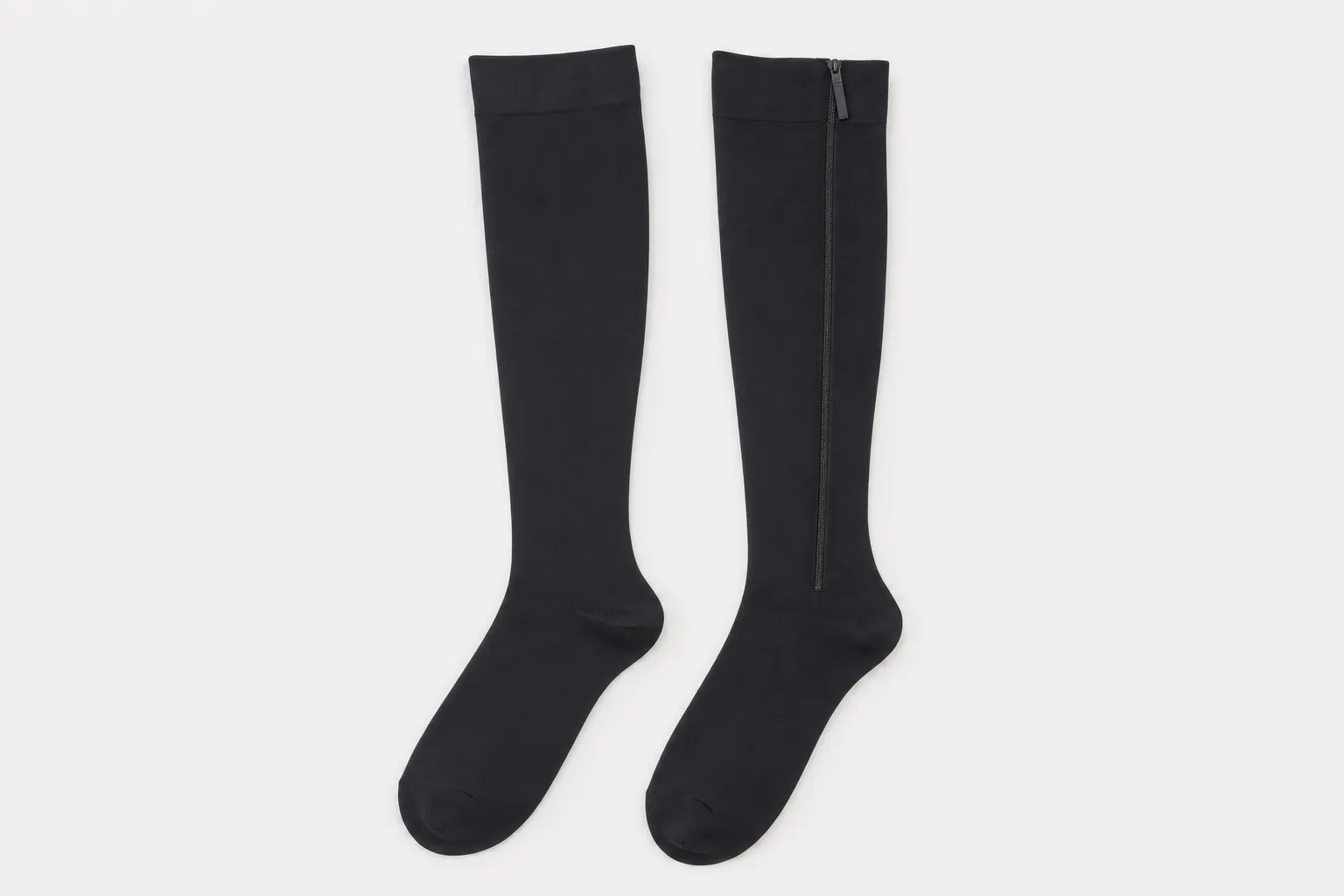
Our zip-up compression socks
-
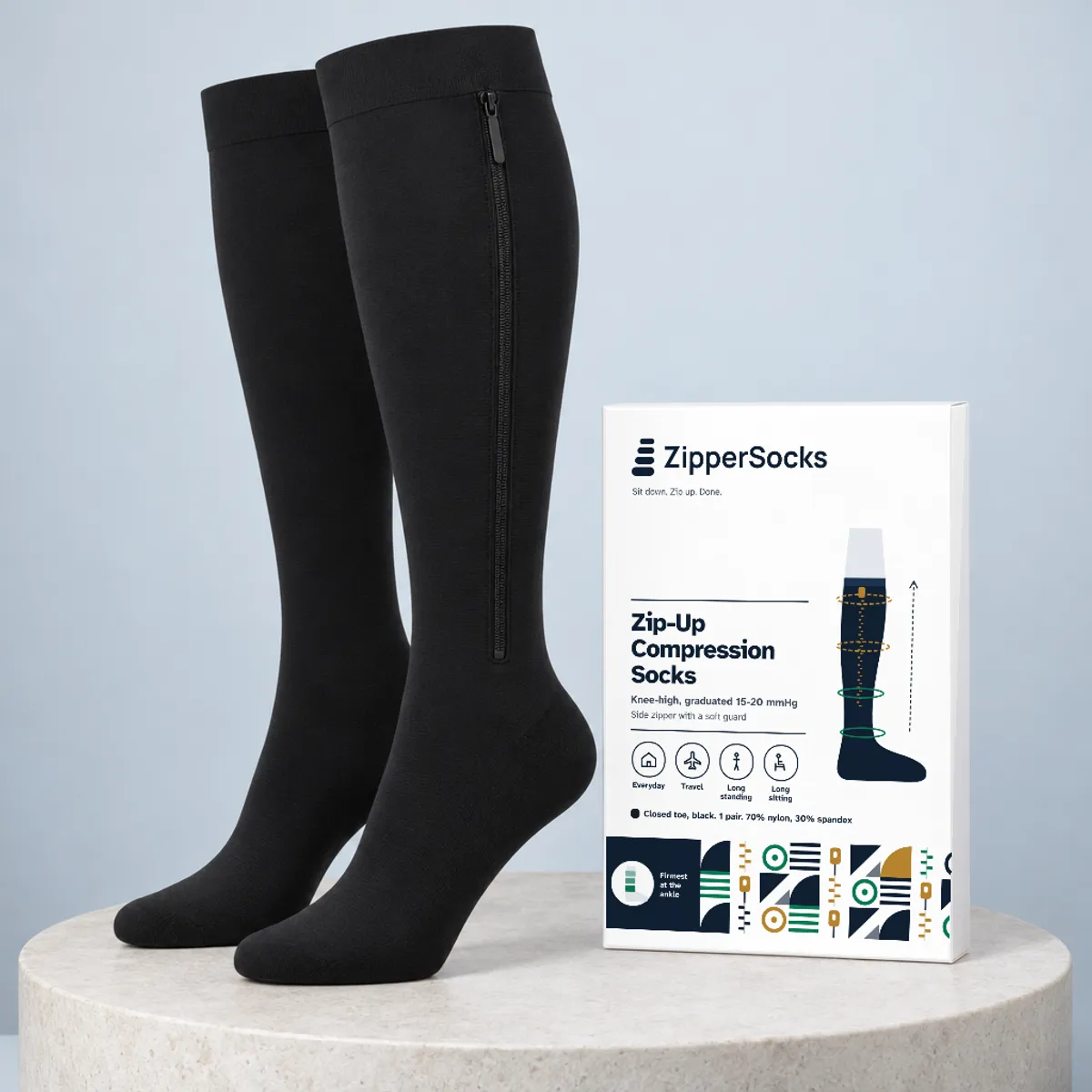
-
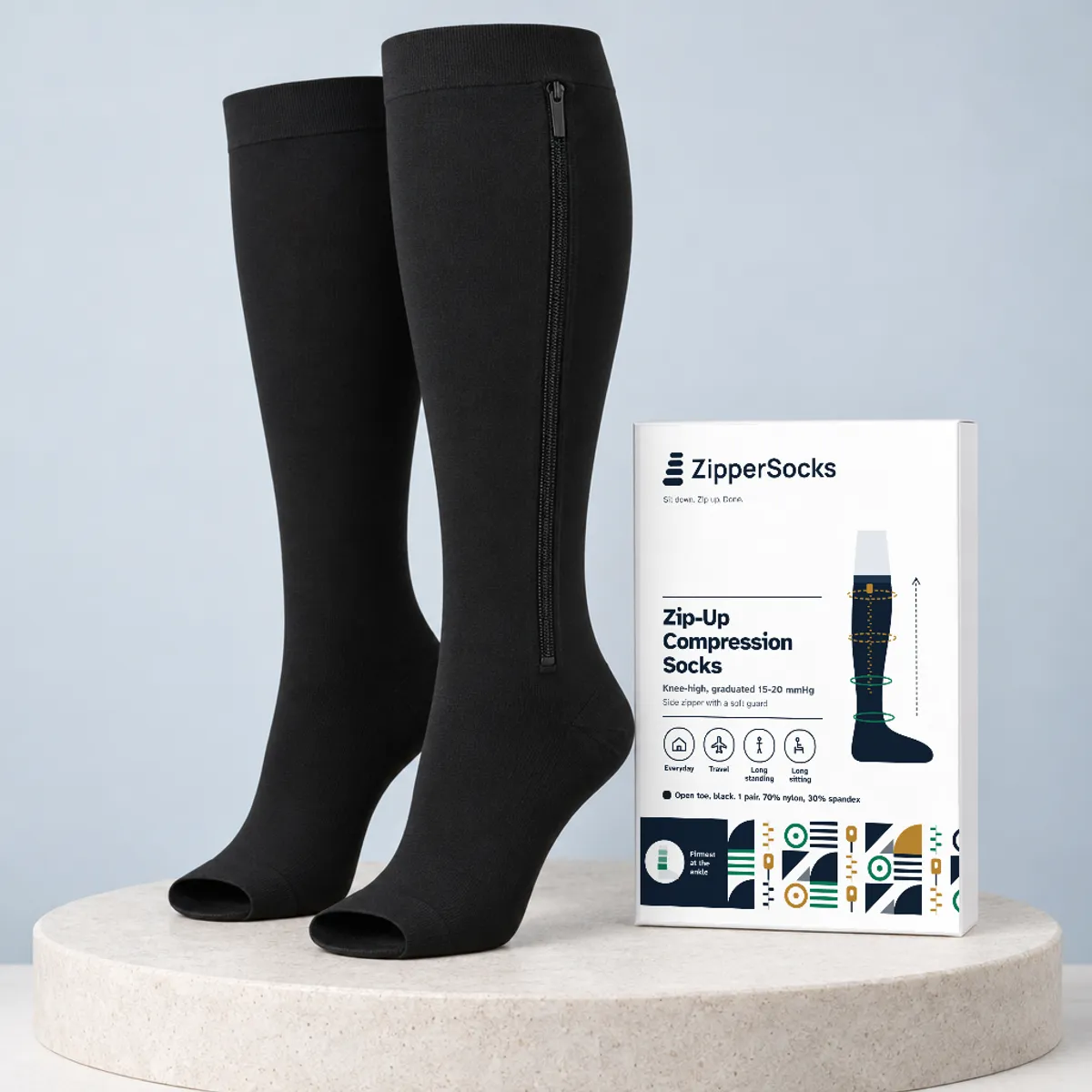
| Zipper compression socks | Regular (pull-on) compression socks | |
|---|---|---|
| Putting them on | Unzip, slide your foot in, zip up. Little pulling over the heel. | The tight ankle has to be stretched over the heel and worked up the leg. |
| Compression | Graduated compression, tightest at the ankle. Ours are 15-20 mmHg. | Graduated compression in the widest range of levels, from mild to very firm. |
| Comfort along the side | A fabric guard sits between the zipper teeth and your skin. Some people still notice the seam. | No zipper. The fabric is the same all the way around. |
| Bulk | A little thicker along one side where the zipper runs. | Thinner and even all the way around. |
| Washing | Close the zipper first so the teeth do not snag other laundry. | Wash as the label says. No zipper to protect. |
| Price | Ours are $29 for one pair, less per pair in multi-packs. | Prices vary widely by brand, length and level. |
| Look | A zipper line shows on one side. | Looks like a regular sock or stocking. |
| Durability | The zipper is one more part that can wear out, and a broken zipper is hard to fix at home. | The elastic wears out over time, but there is no zipper to fail. |
| Lengths and sizes | Mostly knee-high, with fewer lengths and sizes to choose from. | Knee-high, thigh-high and pantyhose, in many sizes and custom fits. |
| Who it suits | Weak hands, arthritis, trouble bending, or a caregiver who helps. | People who can pull socks on and want more lengths, levels or the lowest price. |
The short answer: it comes down to getting them on
Both kinds of sock can give the same graduated squeeze. The real difference is how they go on.
A regular compression sock is tightest at the ankle. To put it on, you have to stretch that tight part over your heel, the widest part of your foot, and then work the fabric up your leg. Doctors know this is a real problem. A review in the Canadian Medical Association Journal lists difficulty putting the stockings on as one of the common reasons people stop wearing them.
A zipper sock opens along the side. You slide your foot in while the leg is open, then zip it closed. You still need to line the heel up and pull the zipper, but you don't have to fight the fabric over your heel.
If putting socks on is not a problem for you, a regular pair is a fine choice. If it is, a zipper is often the thing that decides whether you wear them at all. Our guide on how to put on compression socks covers tricks for both kinds.
Where zipper socks help most
Zipper socks make the most sense when your hands, back or hips make pulling hard. That includes people who:
- Have arthritis in their hands or a weak grip.
- Find it hard to bend down or reach their feet.
- Have a caregiver or family member who helps them dress.
- Have tried a sock aid or rubber gloves and still struggle.
MedlinePlus suggests putting compression stockings on first thing in the morning, before swelling builds up, and mentions a gadget called a stocking donner for pull-on styles. A zipper does a similar job without the extra tool.
If this sounds like you, see our pages on compression socks for arthritis and compression socks for seniors.
The honest downsides of zippers
Zippers solve one problem and bring a few of their own. Here is what to expect.
- The zipper can wear out. It is a moving part. Over months of daily use, the teeth or the pull can wear, and a broken zipper is hard to repair at home.
- Some people find it bulky. The zipper and the strip of fabric behind it add a little thickness along one side of the leg. You may notice it under tight boots or slim pants.
- You can feel the seam. Even with a guard behind the teeth, a few people feel the line of the zipper, especially at first.
- You can see it. The zipper shows on one side of the leg. Most people wear them under pants and don't mind.
- Fewer choices. Regular socks come in more lengths and pressure levels. For example, JOBST lists its Relief stockings in 15-20, 20-30 and 30-40 mmHg and in knee-high, thigh-high and pantyhose styles.
Truform, a long-time maker of medical hosiery, also puts a protective sleeve behind the zipper on its zipper stockings to keep it from pinching. That is a sign the problem is real and that a guard is the standard fix.
How our zipper socks handle the trade-offs
We built our closed-toe Zip-Up Compression Socks and open-toe Zip-Up Compression Socks around the downsides above.
- A soft fabric guard runs behind the full length of the zipper, so the teeth don't sit on your skin.
- Graduated 15-20 mmHg compression, knee-high, in black or beige.
- Five sizes by calf width, from M (8 to 11 inches) up to 3XL (18 to 20 inches). Measure the widest part of your calf with our size guide.
- Made in an FDA-registered facility.
The biggest worry with any zipper is "what if it fails or I hate it?" Our answer is a 90-day money-back guarantee. You can wear and wash the socks and still send them back, and we include a free US return label. The details are on our returns page.
When a regular compression sock is the better pick
A pull-on sock is the better choice if any of these apply:
- Your doctor wants a firmer level than 15-20 mmHg, such as 20-30 or 30-40 mmHg. Many more pull-on styles come in those levels.
- You need a thigh-high or pantyhose style. Ours are knee-high only.
- You can put them on without trouble and would rather not have a seam down one side.
- Your legs are outside standard sizes. A fitter can measure you for a made-to-measure stocking.
Whichever type you choose, it should feel snug but not painful. MedlinePlus advises that you don't let compression stockings bunch up or wrinkle, and to contact your provider if they feel too uncomfortable.
Compression socks are not right for everyone. If you have peripheral arterial disease, poor circulation in the legs, heart failure, skin infections or open wounds, or reduced feeling in your feet, talk to your doctor before wearing them.