Easy-On Compression Socks for Seniors
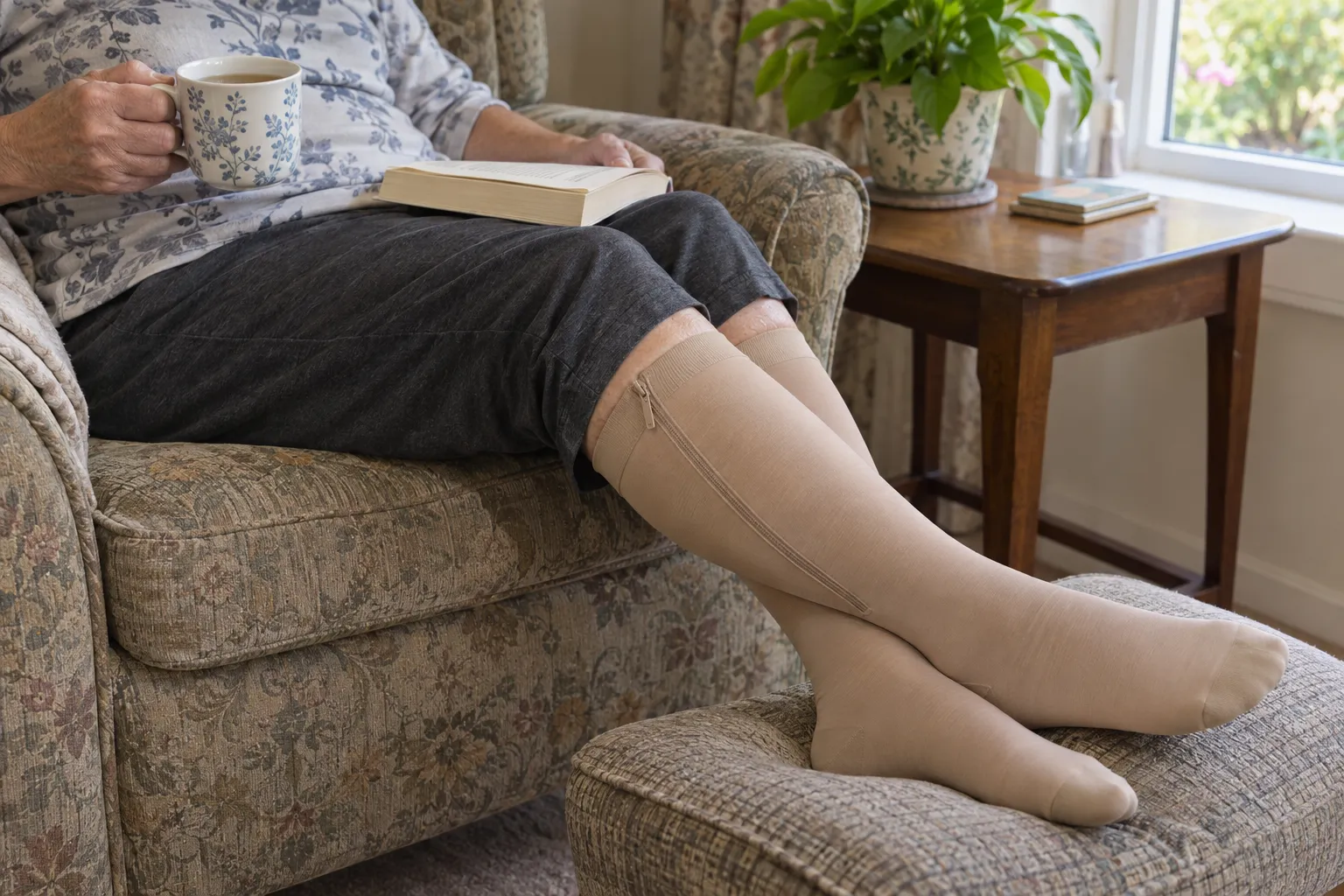
The best compression socks for seniors are the ones you can put on by yourself, every morning, without a struggle. For most older adults that means a light, graduated 15-20 mmHg knee-high sock with a side zipper: you open the sock, set your foot in, and zip it closed instead of dragging tight fabric over your heel.
This page explains why ordinary compression socks are so hard for older hands and legs, how zipper compression socks for seniors work, what strength to choose, and the few health problems that mean you should talk to your doctor before wearing any compression at all.
Our zip-up compression socks
-
-
Why regular compression socks are hard for the elderly to put on
A compression sock has to be snug to work, and that snug fit is exactly what makes it hard to get on. Even MedlinePlus, the National Library of Medicine's health site, has a section called "compression stockings can be hard to put on." Its tips include dusting your legs with powder, wearing rubber dishwashing gloves for grip, and buying a gadget called a stocking donner.
For many older adults, the usual method of rolling the sock down, hooking it over the toes and hauling it past the heel is the hard part. It takes hand strength, a firm pinch and a lot of bending. If any of those are difficult, the socks end up in a drawer.
Skin matters too. As we age, skin gets thinner and more fragile, and MedlinePlus notes that rubbing or pulling on the skin can cause skin tears. Tugging a tight tube of fabric up the shin, day after day, is a lot of rubbing and pulling.
How zipper compression socks for seniors work
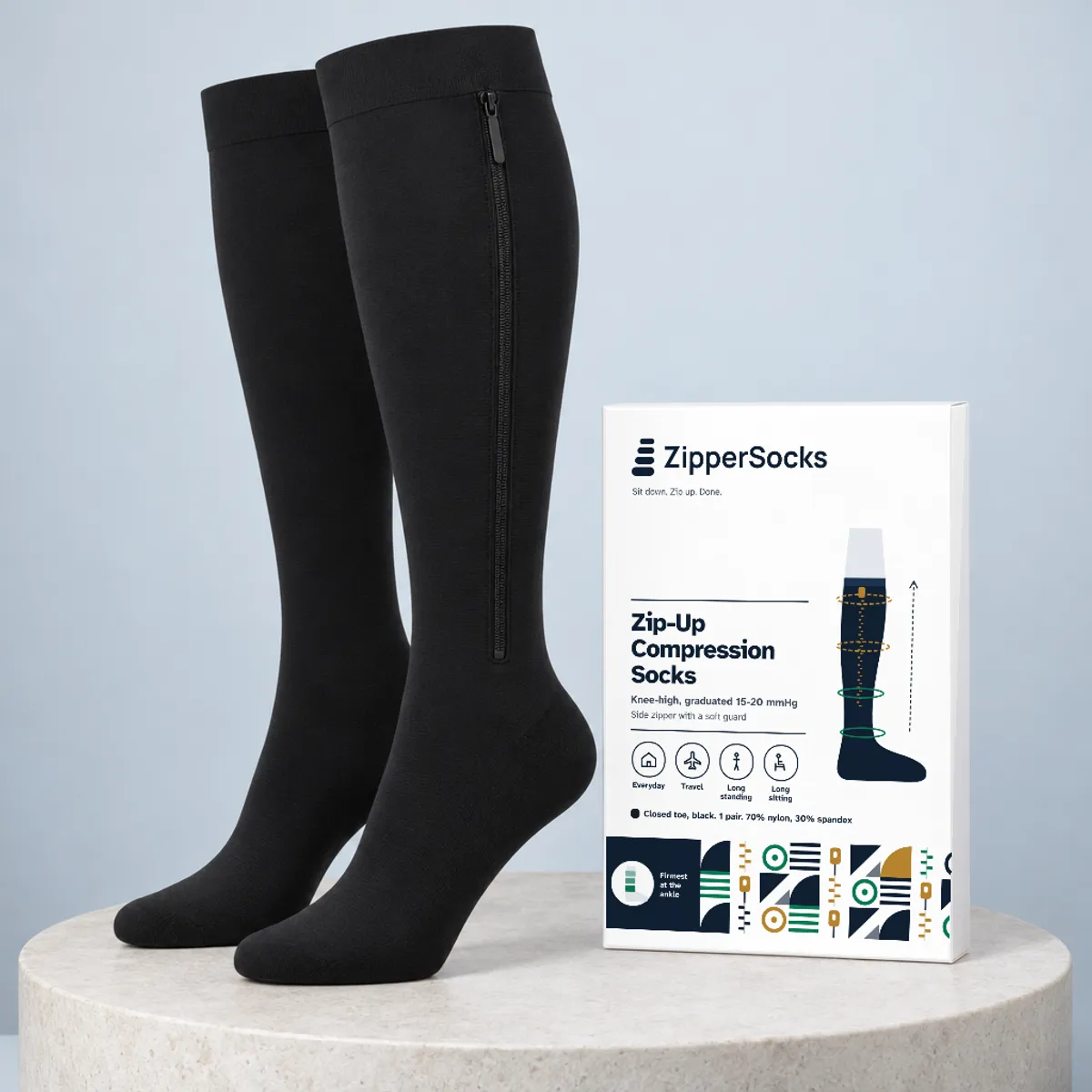
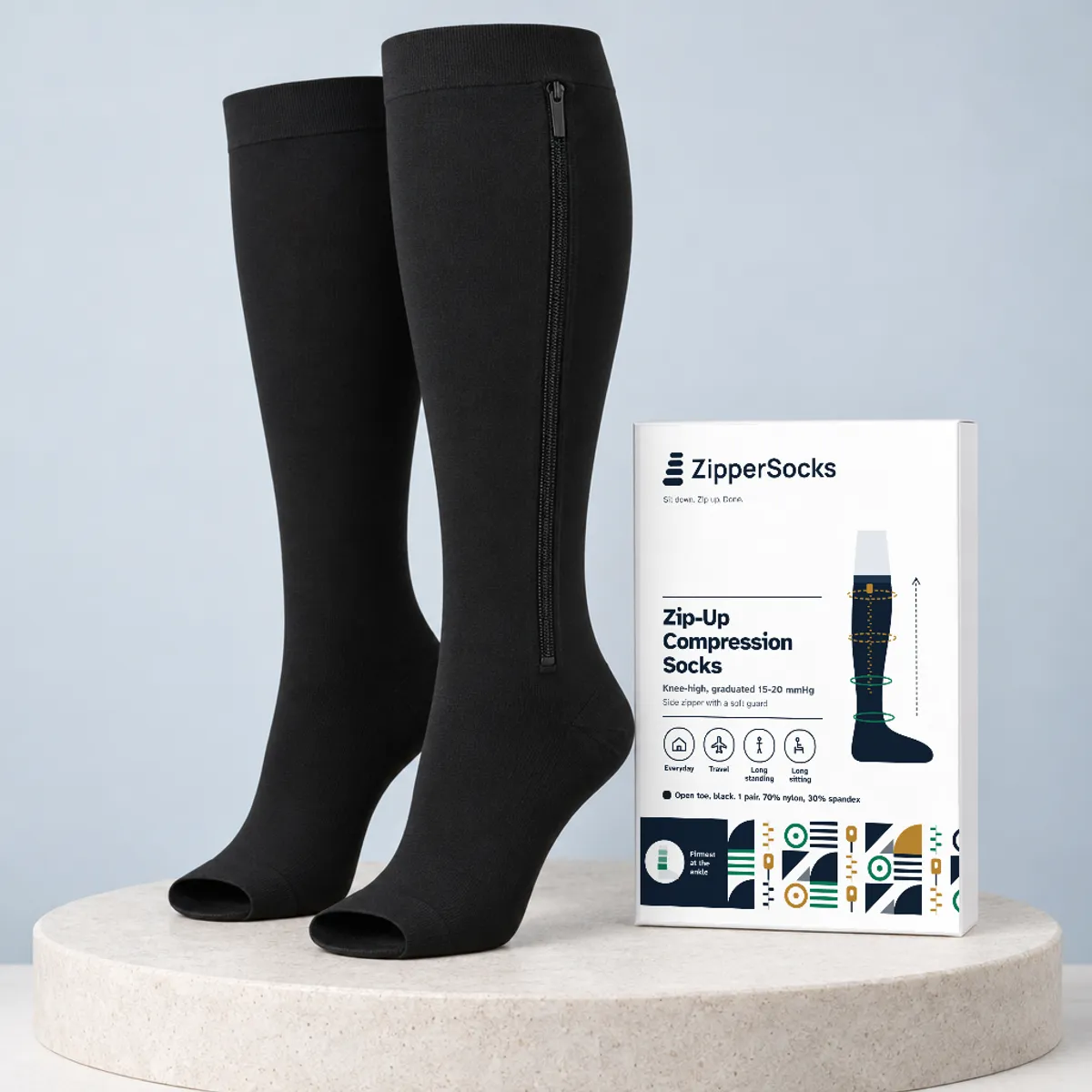
A zipper changes the job from pulling to closing. Our closed-toe zip-up compression socks have a zipper that runs the full length of the side, with a soft strip of fabric behind the teeth so the metal never sits on your skin.
- Sit down in a sturdy chair with your foot flat on the floor or on a low stool.
- Unzip the sock all the way and slide your foot into the foot part, like stepping into a slipper.
- Line up the heel, then wrap the leg part around your calf.
- Zip from the ankle up in one slow, steady pull. Smooth out any wrinkles.
The foot part still has to go on, but there is far less stretching and no fight at the heel. A spouse or caregiver can also do it quickly without lifting the leg much. Our step-by-step guide on how to put on compression socks covers both zipper and regular socks.
What compression level older adults usually need
Compression is measured in millimeters of mercury (mmHg). Cleveland Clinic lists the common levels as mild (8-15 mmHg), moderate (15-20 mmHg), firm (20-30 mmHg) and extra-firm (30-40 mmHg), and says extra-firm should only be used under a doctor's supervision.
For everyday tired legs and mild end-of-day ankle swelling, 15-20 mmHg is a common starting point and is what our socks provide. If your doctor has prescribed a firmer level for a vein condition, follow that instead. Our guide to what mmHg means explains the numbers in plain terms.
Check with your doctor first if you have circulation problems in your legs, such as peripheral artery disease, or heart failure, open wounds, skin infections or very fragile skin. Cleveland Clinic lists these as reasons to skip compression or get your provider's advice. Read more about who should not wear compression socks.
Getting the right size for older legs
Size by the widest part of your calf, not by shoe size. Measure around the fullest part of the calf with a soft tape, ideally in the morning before any swelling builds.
| Size | Calf at widest point |
|---|---|
| M | 8-11 in |
| L | 11-13 in |
| XL | 13-16 in |
| 2XL | 16-18 in |
| 3XL | 18-20 in |
If you are between two sizes, size up. A sock that is too small is harder to zip and can dig in. The full size guide shows how to measure, and if the fit is wrong you can send them back under our 90-day guarantee, even after wearing and washing them.
A safe daily routine with compression socks for the elderly
MedlinePlus advises putting compression stockings on first thing in the morning, when your legs have the least swelling. Cleveland Clinic suggests taking them off before bed. Most people do not need to sleep in them unless a doctor says so.
- Sit to dress. Put socks on while seated, never standing on one leg.
- Put shoes on before walking. The National Institute on Aging advises against walking on floors or stairs in socks or smooth-soled slippers. Wear non-skid, low-heeled shoes over your compression socks.
- Check your skin at night. When the socks come off, look for red marks that don't fade, sores or color changes. Cleveland Clinic says to remove them and call your provider if you notice pain, numbness, tingling, skin discoloration or worsening swelling.
- Keep two pairs. MedlinePlus suggests wearing one pair while the other is washed, and replacing stockings every 3 to 6 months so they keep their squeeze.
To wash ours, close the zipper, put them in a mesh bag, machine wash cold and hang to dry.
Tips for caregivers helping an elderly parent
If you help a parent or partner dress, the zipper saves both of you effort. Have them sit with the foot on a stool so you are not bending to the floor. Slide the foot in, check the heel sits in the heel pocket, then zip up while holding the fabric flat against the leg with your other hand.
Ask them how it feels. The sock should feel firm at the ankle and a little looser toward the knee, never painful. Older adults may be less able to sense pressure, so it is worth looking at the skin each evening too. If your parent also has stiff or painful hands, our page on compression socks for arthritis has more ideas for easier mornings.