Compression Socks You Can Put On With Arthritic Hands
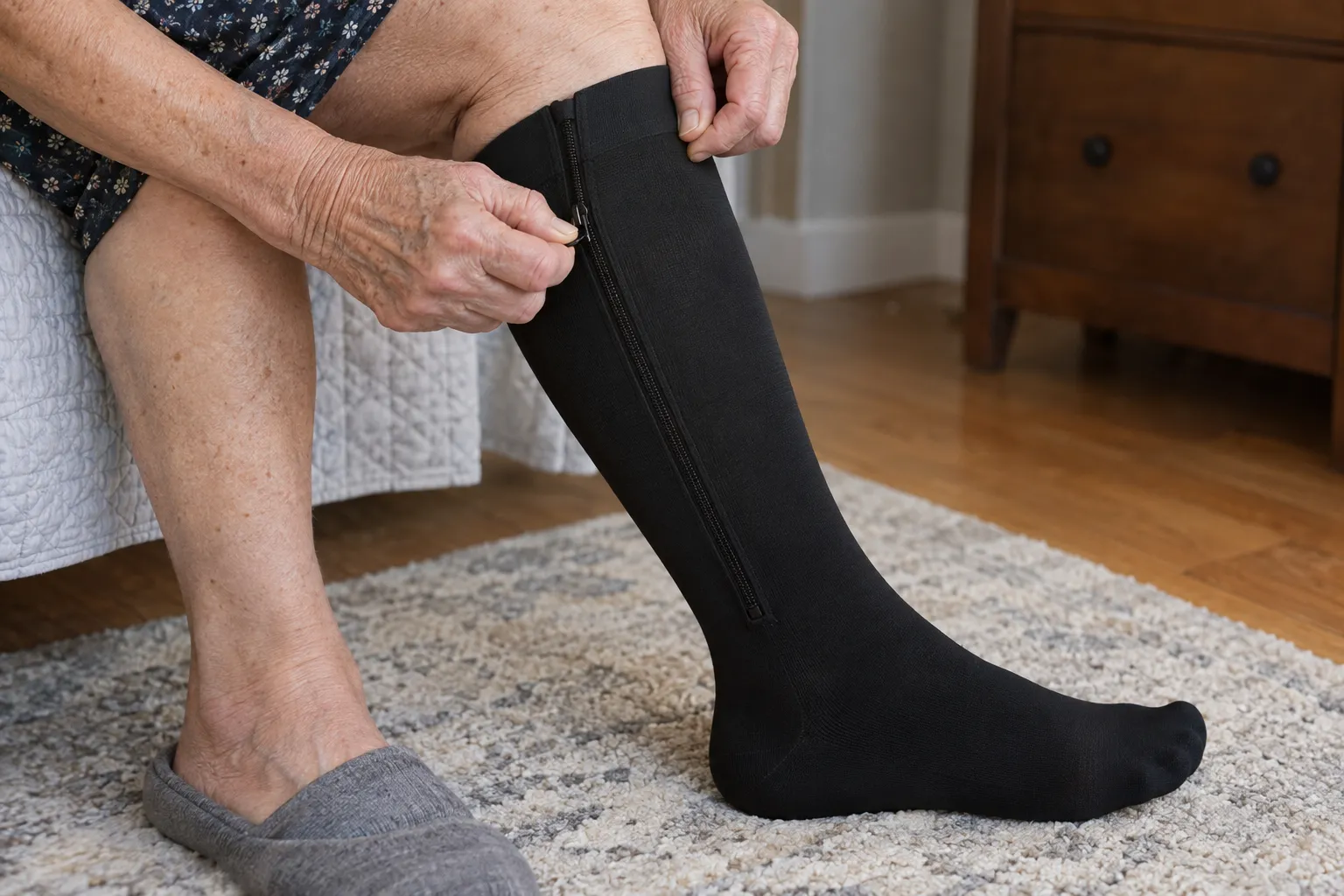
If you have arthritis in your hands, the best compression socks are ones you can put on without pinching, rolling and yanking fabric. A full-length side zipper does that: you set your foot in the open sock and close it with one steady pull on a tab, instead of forcing a tight tube past your heel.
To be clear about the limits: compression socks work on the legs, by gently squeezing to help with swelling and tired, heavy legs. They do not treat arthritis itself. But if you have arthritis and your legs or ankles swell, a sock you can actually manage makes the difference between wearing them and not.
Our zip-up compression socks
-
-
Why arthritis makes regular compression socks so hard
Putting on a standard compression stocking uses almost every motion arthritis makes painful: gripping thin fabric, pinching it tight, twisting the wrist and bending forward to reach the foot.
The National Institute of Arthritis and Musculoskeletal and Skin Diseases (NIAMS) lists symptoms of rheumatoid arthritis that include morning stiffness lasting longer than 30 minutes and swelling that makes it hard to make a fist or button clothes. It notes RA is more common in the wrists, hands and feet. Osteoarthritis also often affects the hands, especially the ends of the fingers and the base of the thumb, according to NIAMS.
So the moment you are most likely to need compression socks, first thing in the morning, is also when your hands may be stiffest.
What arthritis socks with compression can and can't do
The term "arthritis socks" gets used for many things, from loose warm socks to graduated compression. Here is the honest picture for compression socks:
- What they are for: gentle pressure on the lower leg to help with ankle and leg swelling and achy, heavy legs, especially after long periods of sitting or standing.
- What they are not: a treatment for joint damage, joint pain or inflammation in your hands, knees or feet.
Swelling and arthritis often show up together, though. The Arthritis Foundation suggests asking your occupational therapist about compression stockings if foot swelling interferes with your sleep. That is the right person to ask, because they can also look at how you manage dressing in general.
It is also worth asking why your legs swell. MedlinePlus lists some common arthritis medicines, including NSAID pain relievers and steroids, among the medicines that can cause leg and ankle swelling. Do not stop any medicine on your own; your doctor can tell you whether a change makes sense and whether compression socks are a reasonable addition.
How a zipper helps arthritic hands
The Arthritis Foundation recommends zipper pulls, buttoning aids and easy fasteners to make dressing easier with arthritis. A zipper sock applies the same idea to compression. Our open-toe zip-up compression socks open along the full length of the leg, so:
- You hold one tab instead of a fistful of slippery fabric.
- The pull is upward, along the leg, using your arm more than your fingers.
- Taking them off at night is a single pull down, with no peeling.
A soft fabric guard sits behind the teeth so the zipper never rubs your skin. If even the tab is hard to pinch, a simple zipper pull aid of the kind sold for jackets may give you a bigger handle to hook a finger through.
Putting compression socks on with limited mobility
The Arthritis Foundation's tips for easier mornings with arthritis work well here: warm up stiff joints first, for example with a warm shower or by putting clothes in the dryer for a few minutes, and lay out your clothes and dressing aids the night before.
- Sit on a firm chair. Rest your foot on a low stool so you are not folding forward to the floor.
- Open the sock fully and slide your foot in. If reaching your foot is hard, ask an occupational therapist about reaching aids; the Arthritis Foundation mentions long-handled tools, such as a long shoehorn, that extend your reach without bending.
- Wrap the leg part around your calf and zip upward slowly. Smooth out wrinkles with a flat palm, not your fingertips.
MedlinePlus advises putting compression stockings on in the morning, when swelling is lowest. Our full guide on how to put on compression socks has photos of each step.
Rheumatoid arthritis and compression socks: what to ask your doctor
Many people with arthritis can wear light compression with no problem, but a quick check with your doctor or rheumatologist is wise, especially with rheumatoid arthritis. NIAMS notes that RA can cause problems outside the joints, including inflammation of blood vessels and effects on the skin.
Ask your doctor before starting if you have poor circulation in your legs or peripheral artery disease, heart failure, numbness in your feet, open sores or very fragile skin. These are the situations where compression may not be safe. Our article on who should not wear compression socks goes through each one.
Also mention any new or one-sided leg swelling. That should be checked rather than managed at home.
Choosing size and toe style
Size by your calf at its widest point, not your shoe size, and size up if you are between sizes. A sock that is too small is harder to zip, which defeats the purpose. The size guide shows how to measure with a soft tape.
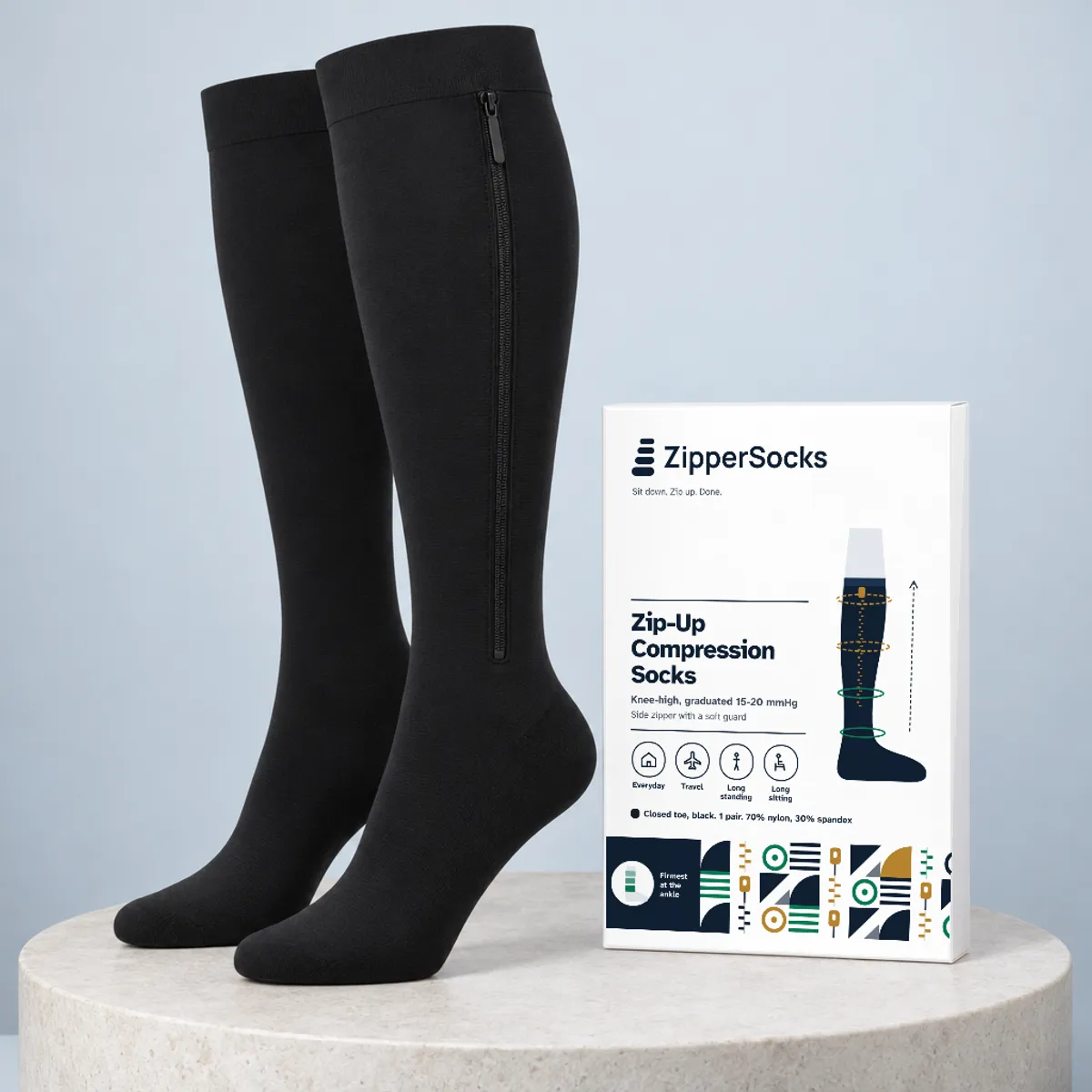
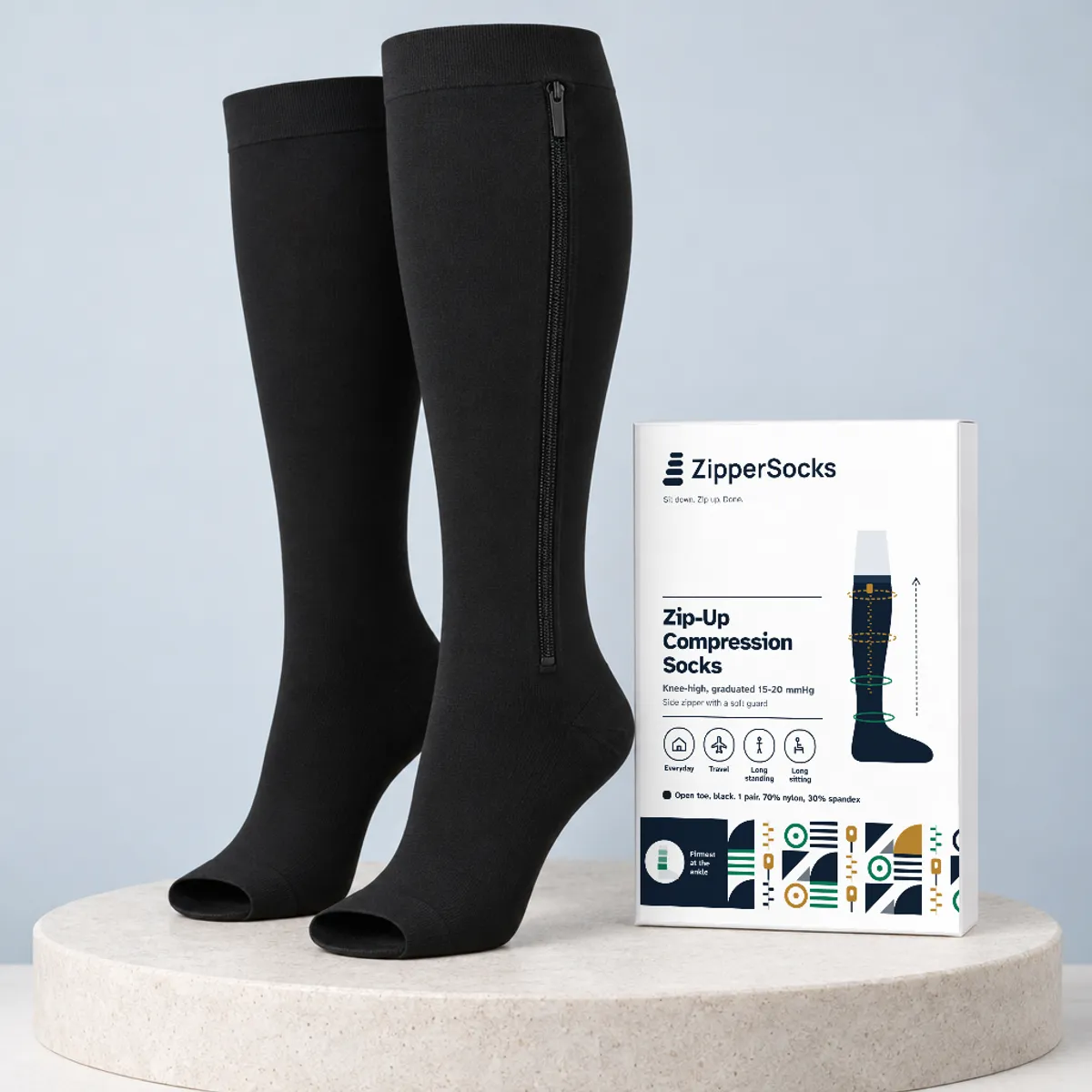
For arthritis in the feet, the open-toe version leaves toes with bunions or changed joints free. If you prefer warm feet and wear closed shoes most of the day, the closed-toe version wears like a regular sock. Both are 15-20 mmHg and come in black and beige.
If you help an older parent who has arthritis, our page on compression socks for seniors covers caregiver tips, safe sitting routines and skin checks.