Compression Socks for Swollen Ankles, Feet and Legs
Compression socks can help everyday swelling in the ankles, feet and lower legs by gently squeezing the leg so fluid is pushed back up instead of pooling at the bottom. For mild swelling in both legs that builds through the day, a light 15-20 mmHg knee-high sock worn from morning until bedtime is the usual place to start.
Swelling is a symptom, though, not a diagnosis. Swelling in one leg, swelling with pain or redness, or swelling with shortness of breath needs medical care before you reach for any sock. This page explains the common causes, how compression helps, which level to choose, and the warning signs.
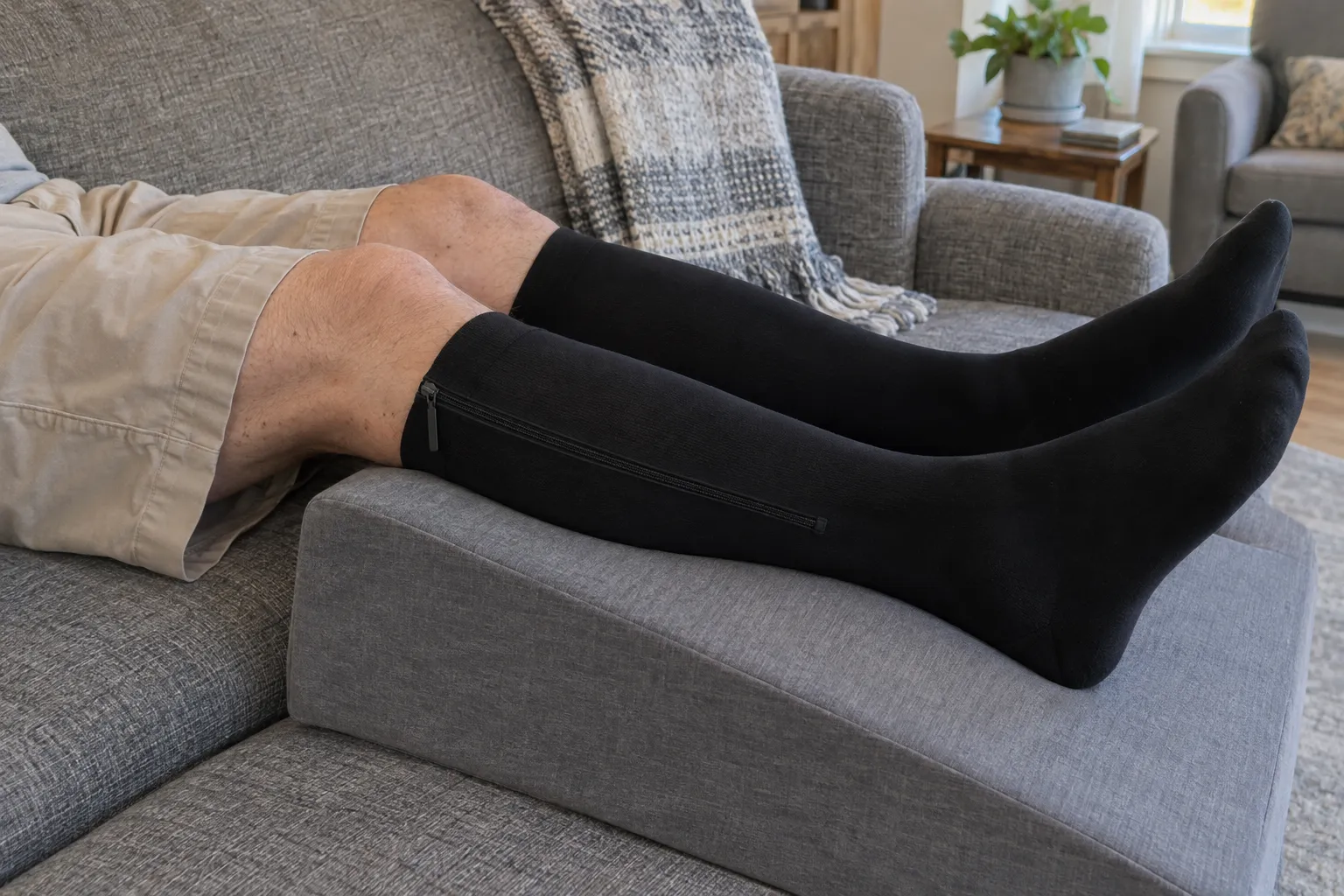
Compression socks are not right for everyone. If you have peripheral arterial disease, poor circulation in the legs, heart failure, skin infections or open wounds, or reduced feeling in your feet, talk to your doctor before wearing them.
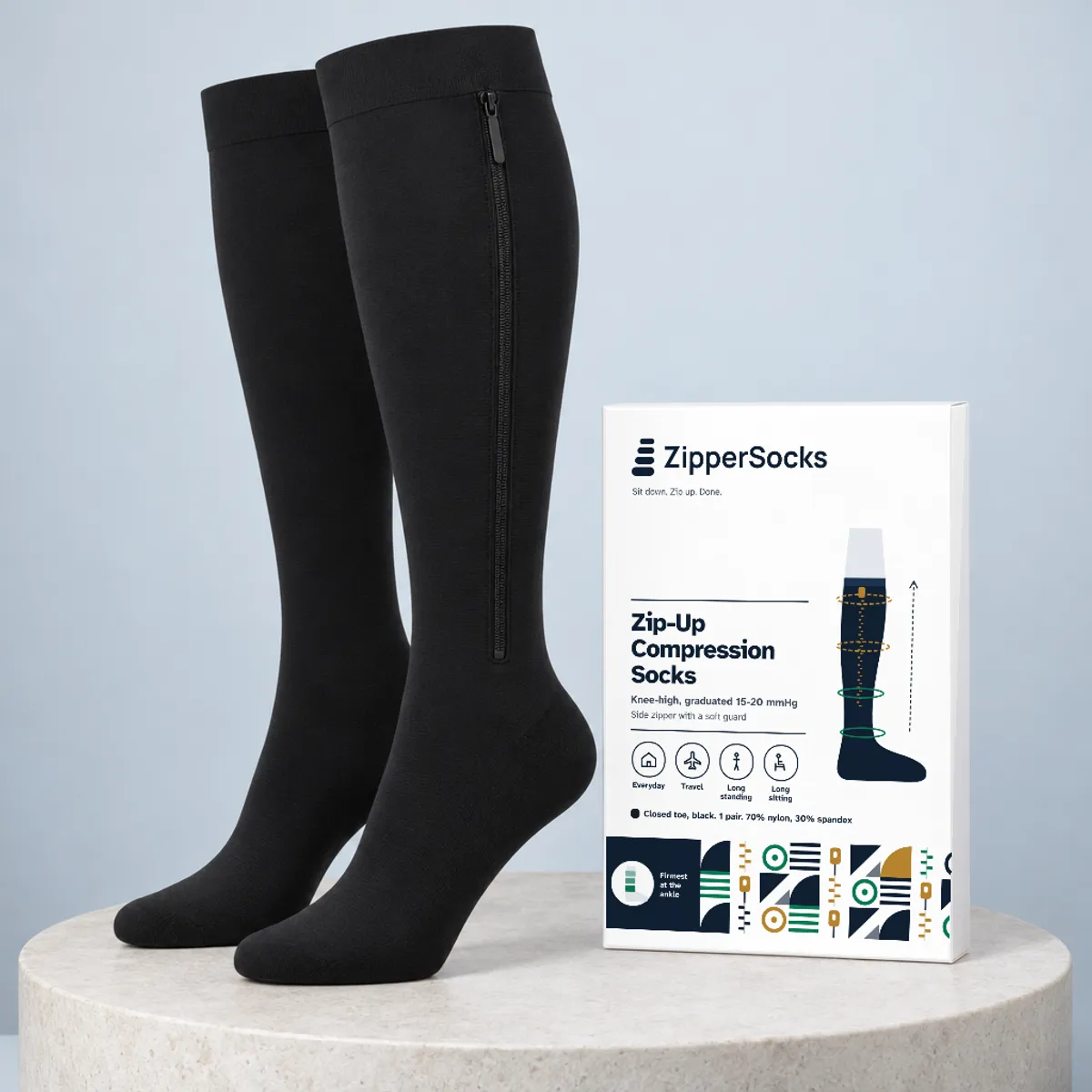
Our zip-up compression socks
-
-
What causes swollen feet, ankles and legs (edema)
Swelling from fluid in the tissues is called edema. Gravity pulls fluid down, so it tends to collect in the feet and ankles and is often worse in the evening. MedlinePlus lists many causes, including:
- Long periods of standing or sitting, including long flights and car rides
- Being older or overweight
- Venous insufficiency, often linked to varicose veins, where leg veins struggle to move blood back up
- Pregnancy, hormones and parts of the menstrual cycle
- Some medicines, such as certain blood pressure drugs (calcium channel blockers), steroids, hormones and NSAID pain relievers
- An injury, infection or blood clot in the leg
- Heart, kidney or liver failure
Cleveland Clinic notes edema most often affects people with heart, liver or kidney disease, and is also common in pregnancy, in adults over 65, and in people who spend a lot of time on their feet. Do not stop a medicine you think is causing swelling without talking to your provider first.
When swelling needs a doctor before compression socks
Get medical help now if one leg is newly swollen, especially with pain, warmth, redness or discoloration. These are signs of a deep vein thrombosis (DVT), a blood clot, and the CDC says to see a doctor as soon as possible. Do not put a compression sock on a leg you think has a clot.
Call 911 if swelling comes with shortness of breath, chest pain or pressure, coughing up blood, or fainting. A clot can travel to the lungs.
Also contact your provider promptly if:
- You have heart, kidney or liver disease and the swelling is new or getting worse.
- The swollen area is red or warm, or you have a fever, which can mean infection.
- You have diabetes and your feet, ankles or legs are swollen. See our page on compression socks for diabetics.
- You are pregnant and the swelling is sudden or more than mild.
- The swelling is severe, painful, or does not improve after a few days of home care.
Cleveland Clinic advises asking your provider before using compression for severe swelling, whether it is unexplained or caused by a known condition such as heart failure or kidney disease.
How graduated compression helps swelling
Graduated compression socks are tightest at the ankle and gradually looser toward the knee. Cleveland Clinic explains that compression socks squeeze the calf to increase pressure in the tissue under the skin and reduce fluid buildup, which improves blood flow back toward the heart.
Socks work best alongside the other basics that health sources recommend:
- Raise your legs above the level of your heart when lying down, on pillows if needed.
- Keep moving. Walking and ankle exercises help pump fluid back up.
- Take breaks from long sitting or standing, including on trips.
- Cut back on salt, and avoid tight bands around the thighs.
For more on the mechanics, read what compression socks actually do.
15-20 vs 20-30 mmHg for swollen legs and edema
Cleveland Clinic describes 15-20 mmHg as moderate compression and 20-30 mmHg as firm. A Cleveland Clinic doctor suggests starting with lighter socks and making sure they are not too tight for you.
| Level | Typical use |
|---|---|
| 15-20 mmHg | Mild, everyday swelling in both legs; long days of standing or sitting; travel |
| 20-30 mmHg | Swelling from a diagnosed vein problem, such as chronic venous insufficiency, usually on a doctor's advice |
| 30-40 mmHg | Usually prescription only, used under a doctor's supervision |
Our zip-up socks are 15-20 mmHg. If your doctor recommends a firmer level, follow that advice. Our guide to what mmHg means explains the scale.
How long to wear compression socks for swelling
Put them on in the morning, before swelling builds, and take them off at bedtime. MedlinePlus notes your legs have the least swelling early in the day, so the sock goes on more easily then. Cleveland Clinic says most people should not sleep in compression socks; our article on sleeping in compression socks covers the exceptions.
It can take a few days to get used to the squeeze. Take them off and call your provider if you notice pain, numbness, tingling, skin color changes, or swelling that gets worse, which Cleveland Clinic lists as warning signs.
Many people find socks help most on the days their legs swell the most, such as long shifts, flights or car trips. Cleveland Clinic suggests combining approaches, for example wearing compression socks while you walk and then raising your feet later in the day. If the swelling has not improved after a few days of home care, or it keeps getting worse, the NHS advises seeing a doctor.
Getting socks on over swollen ankles: where the zipper helps
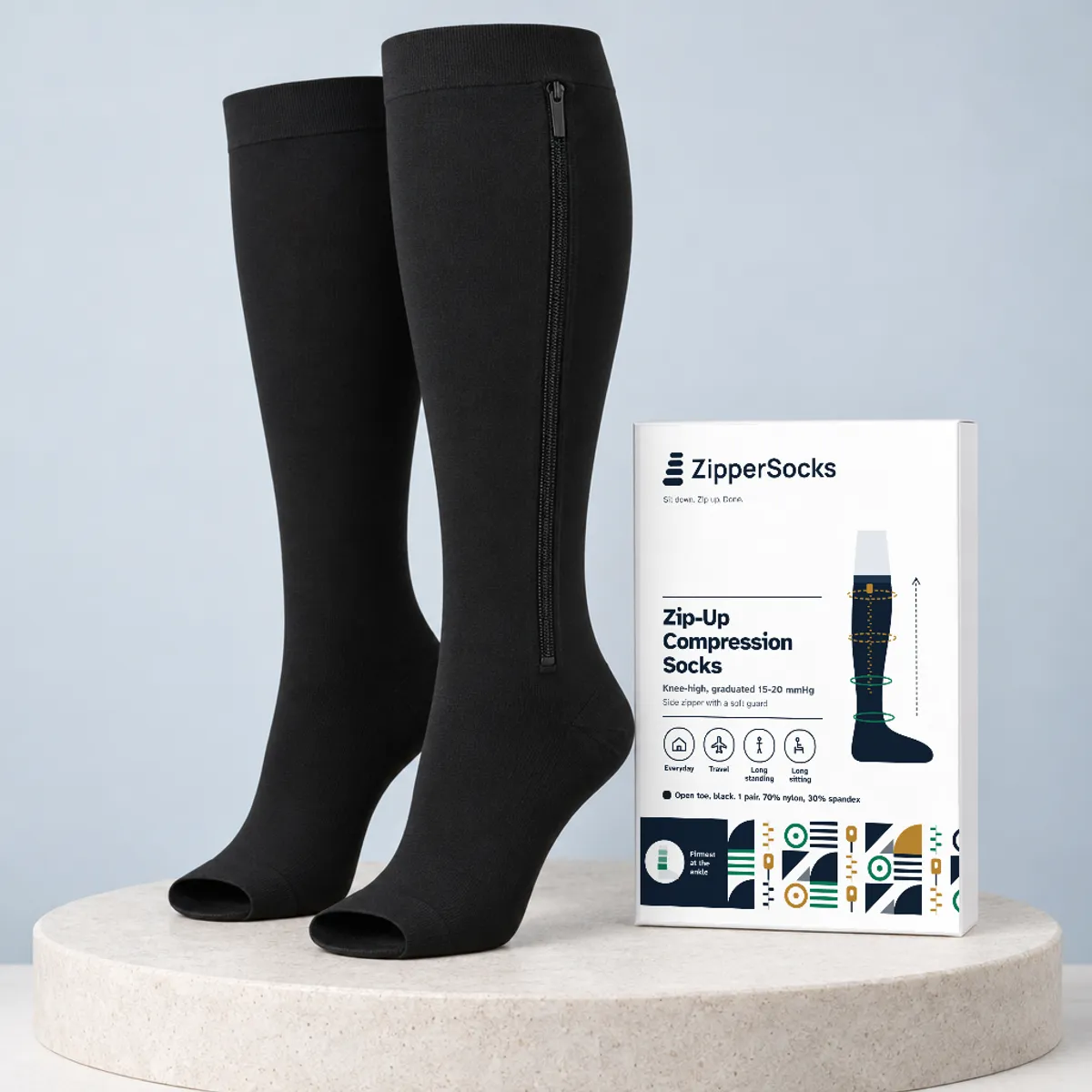
A swollen ankle is the hardest part of any compression sock to get past. With a pull-on sock you are stretching a tight tube over the widest point of a puffy foot. Our open-toe zip-up compression socks and the closed-toe version open down the full side, so the foot goes in first and the zipper closes the leg around it.
Size by your calf at the widest point, measured in the morning. If you are between sizes, size up. The size guide walks you through it.