Maternity Compression Socks That Zip On (No Bending Over the Bump)
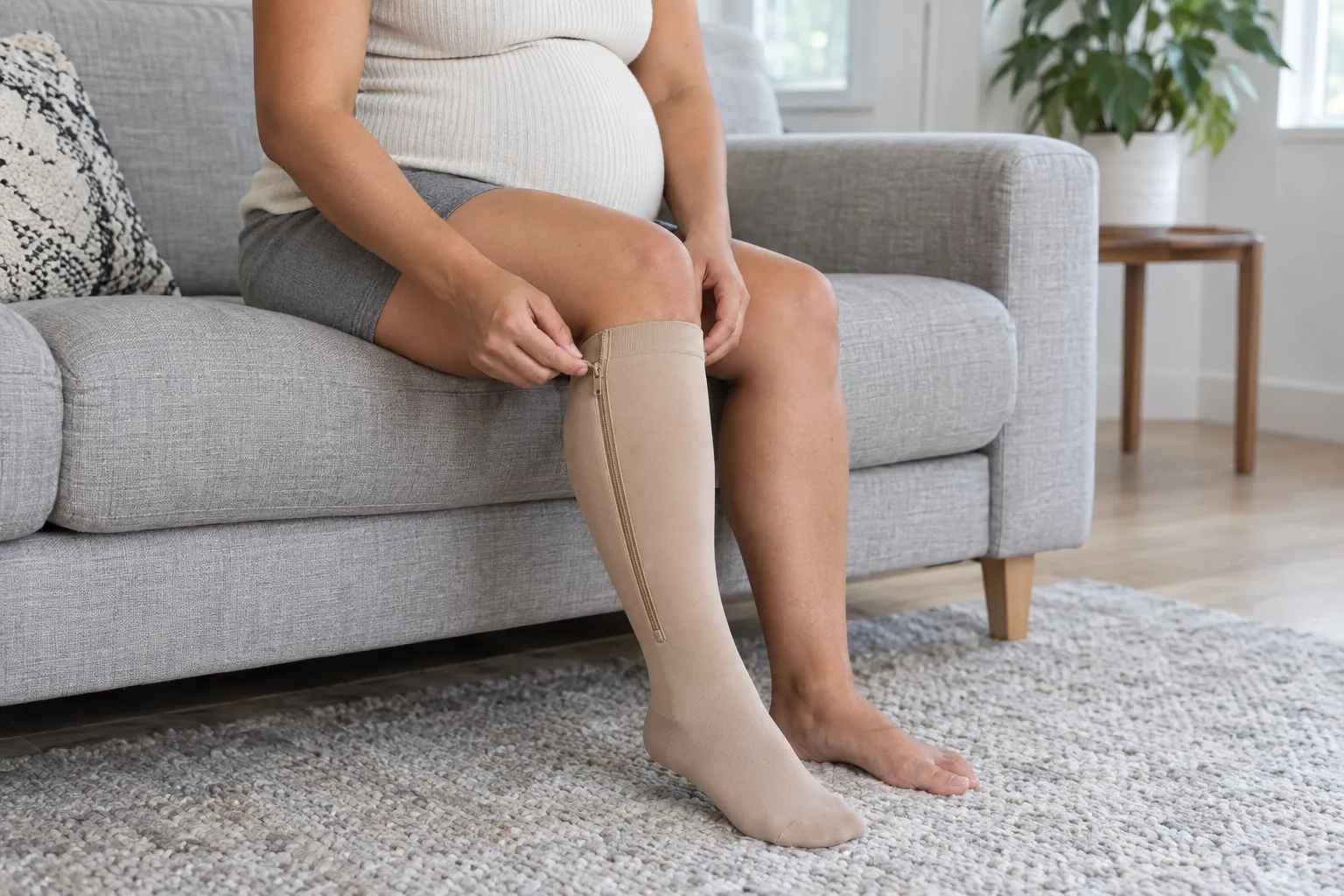
Pregnancy compression socks can ease the swollen ankles and heavy, achy legs that often build later in pregnancy, as long as your OB or midwife agrees they are right for you. A light 15-20 mmHg knee-high pair is the usual over-the-counter choice, and a side zipper lets you put them on sitting upright instead of folding over your bump to tug fabric past your heel.
Most leg swelling in pregnancy is normal. But some swelling is a warning sign, so this page covers what to watch for first, then how compression helps, what to look for in maternity compression socks, and how to wear them through pregnancy and after the birth.
Compression socks are not right for everyone. If you have peripheral arterial disease, poor circulation in the legs, heart failure, skin infections or open wounds, or reduced feeling in your feet, talk to your doctor before wearing them.
Our zip-up compression socks
-
-
Why legs and ankles swell in pregnancy
The NHS explains that swelling happens because your body holds more water than usual in pregnancy, and the pressure of the growing womb can affect blood flow in your legs. Fluid then collects in the legs, ankles and feet. It is often worse at the end of the day, further into pregnancy, in hot weather, and after long periods of standing.
The same pressure can cause varicose veins. ACOG, the American College of Obstetricians and Gynecologists, notes that the weight of the uterus can reduce blood flow from the lower body, making leg veins swollen, sore and blue. These often improve after delivery.
Pregnancy also raises the risk of blood clots. ACOG lists pregnancy and the 4 to 6 weeks after giving birth as times of higher risk for deep vein thrombosis (DVT).
Ask your OB or midwife first, and know the warning signs
ACOG advises talking with your ob-gyn before trying compression stockings, because some people should not wear them, for example people with diabetes or other circulation problems. ACOG also notes that compression stockings can raise the risk of DVT if they are too tight or worn incorrectly, which is why fit matters.
Call your doctor or midwife right away if you have sudden swelling of your face, hands or feet, a severe headache that won't go away, changes in your vision such as blurring or flashing lights, or pain under the ribs or in the upper belly. These can be signs of preeclampsia, a serious blood pressure condition that ACOG and the NHS say needs checking immediately.
Also call right away about swelling, pain, warmth or redness in one leg, which can be a blood clot. Call 911 for chest pain or trouble breathing.
How compression socks help pregnancy swelling
Graduated compression gently squeezes the lower leg, firmest at the ankle, to help keep fluid and blood from pooling. The National Heart, Lung, and Blood Institute says that if you are pregnant, your provider may recommend compression hose to relieve varicose vein symptoms such as pain or heaviness. The NHS says compression stockings may be used for varicose veins in pregnancy, and ACOG lists wearing support hose among ways to ease them.
Socks work best alongside the NHS tips for pregnancy swelling:
- Avoid standing for long periods.
- Rest with your feet up as much as you can.
- Take regular walks, or do foot exercises such as bending and stretching your foot up and down.
- Wear comfortable shoes without tight straps.
For long car or plane trips, ACOG suggests drinking fluids, walking and stretching regularly, and says your ob-gyn may recommend compression stockings. Our page on compression socks for swelling explains the mechanics in more depth.
Compression will not make pregnancy swelling disappear, and the swelling usually settles after the birth. Think of the socks as one more way to stay comfortable on the days you are on your feet the most.
What to look for in the best compression socks for pregnancy
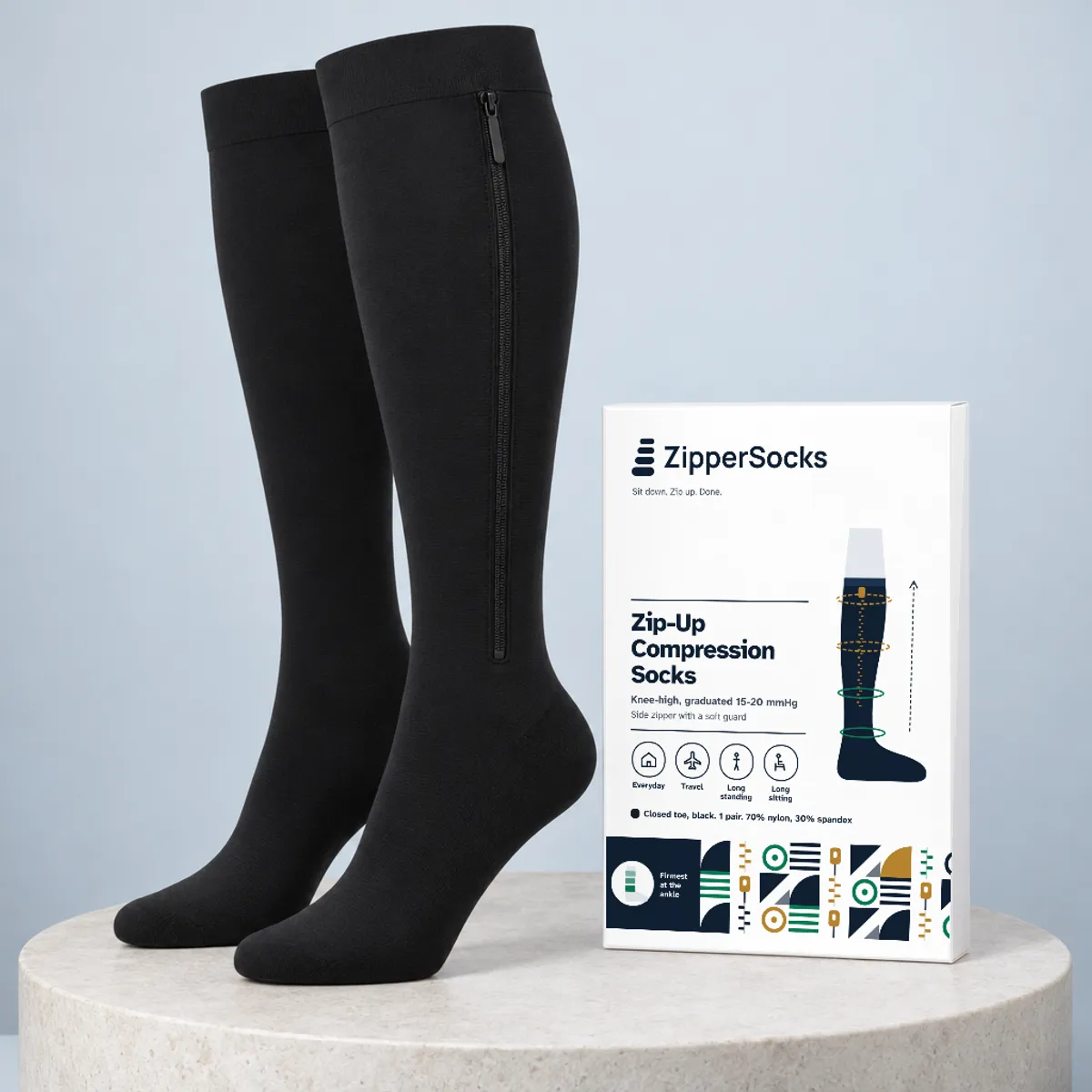
- Light, graduated pressure. Cleveland Clinic says low compression, under 20 mmHg, is available over the counter and may be a good choice in pregnancy, and advises checking with your provider first. Our socks are 15-20 mmHg.
- Knee-high length. Nothing presses on your bump or waist, unlike maternity compression tights.
- The right size, rechecked. Size by your calf at the widest point and size up if you are between sizes. Your calves may change as pregnancy goes on, so measure again if the socks start to feel tight. The size guide shows how.
- Easy on and off. If they are a struggle, you will stop wearing them.
Putting them on without bending over the bump
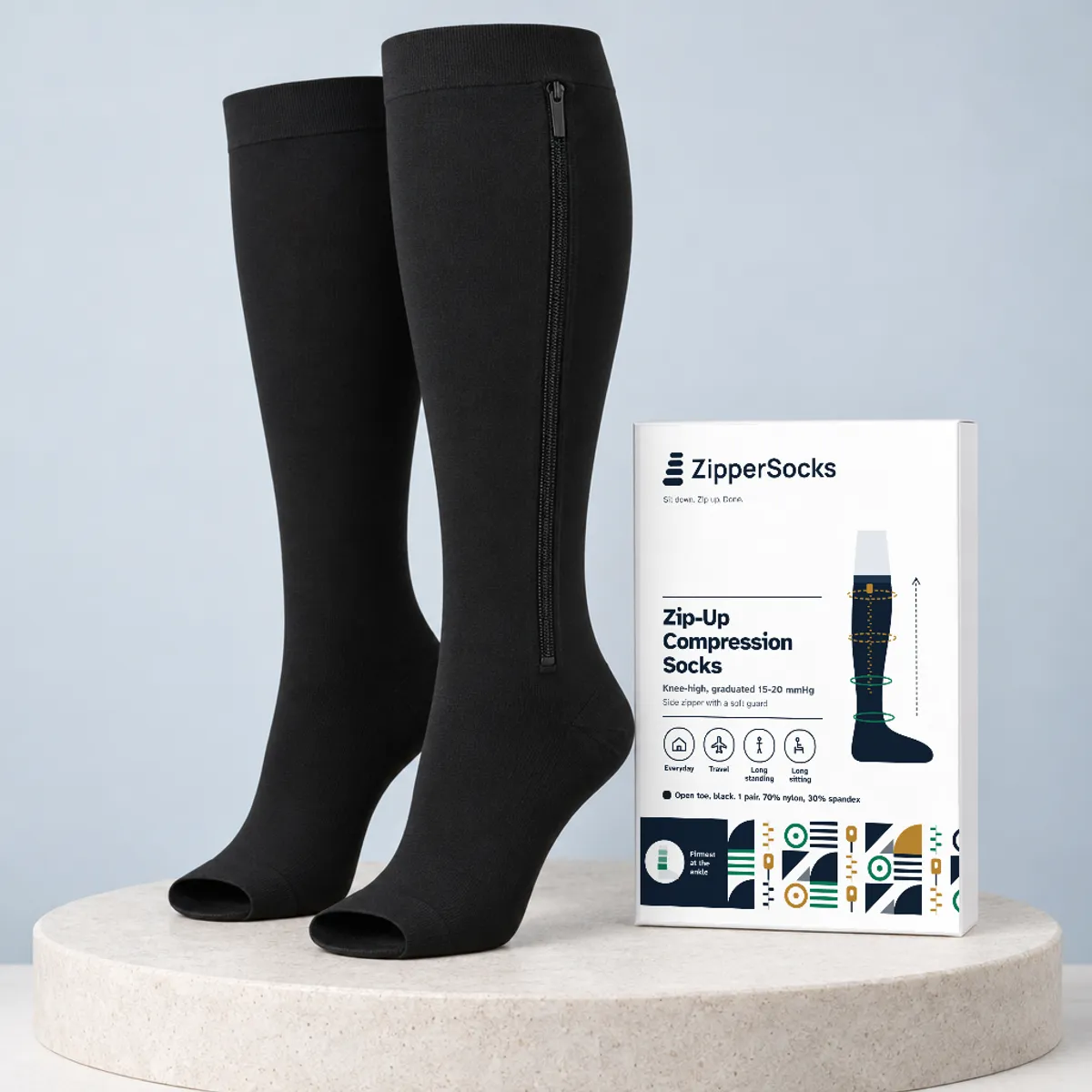
Pulling a tight stocking over your heel means reaching your foot, which gets harder every month. With our open-toe zip-up compression socks you mostly skip that:
- Sit upright on a chair and rest your foot on a low stool or the edge of the bed.
- Unzip the sock fully and slip your foot in, then line up the heel.
- Zip from ankle to knee in one pull, which is a reach to your shin rather than your toes.
A partner can also zip them for you. A soft fabric guard sits behind the teeth so the zipper never touches your skin. Put them on in the morning, when swelling is lowest. The closed-toe version zips the same way if you prefer covered toes, and our guide on how to put on compression socks has more tips.
Wearing maternity compression socks through the day and after birth
Wear them during the day and take them off at bedtime, as the NHS advises for compression stockings. Machine wash cold with the zipper closed, in a mesh bag, and hang to dry; having two pairs lets you wear one while the other dries.
The socks should feel snug, never painful. Take them off and call your provider if you notice pain, numbness, tingling, skin color changes or swelling that gets worse, which Cleveland Clinic lists as warning signs.
Because clot risk stays higher for 4 to 6 weeks after birth, ask your provider whether to keep wearing compression after delivery, especially after a cesarean birth. Follow their advice on strength and how long to wear them. Varicose veins that appeared in pregnancy often get better after the baby is born.