Compression Socks for Varicose and Spider Veins
Compression socks can ease the aching, heaviness and ankle swelling that often come with varicose veins, by squeezing the leg so blood does not pool in stretched veins. They are a comfort tool rather than a fix: the evidence that stockings shrink varicose veins or stop new ones from forming is limited.
That is still a good reason to wear them. If your legs feel heavy by mid-afternoon, compression is one of the simplest things that can help. This page covers what causes varicose and spider veins, what compression can and can't do, which strength to choose, and the signs that mean you should see a doctor.
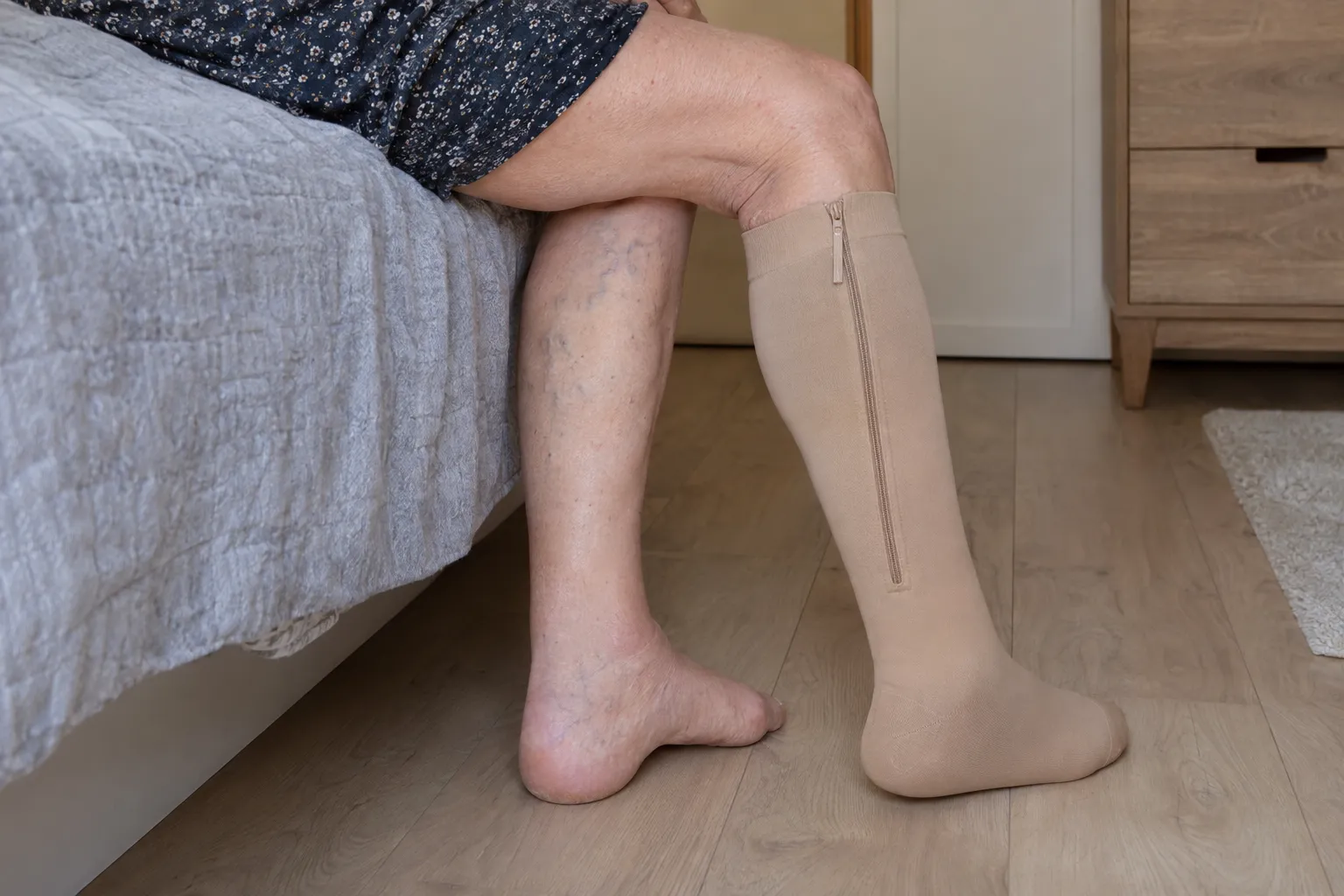
Compression socks are not right for everyone. If you have peripheral arterial disease, poor circulation in the legs, heart failure, skin infections or open wounds, or reduced feeling in your feet, talk to your doctor before wearing them.
Our zip-up compression socks
-
-
What causes varicose veins and spider veins
Leg veins have small one-way valves that keep blood moving up toward the heart. When valves weaken, blood leaks back and collects, and the vein stretches and twists. The NHS describes varicose veins as very common, and more likely if you are a woman, older, overweight, pregnant, stand or sit for long periods, or have family members with them.
Spider veins are smaller. The federal Office on Women's Health describes them as usually red, looking like tree branches or spider webs, and seen under the skin without bulging. Most varicose and spider veins do not cause health problems, but larger varicose veins can ache, throb and feel uncomfortable after long sitting or standing.
When the valve problem affects how well the leg veins work overall, it is called chronic venous insufficiency (CVI). Cleveland Clinic explains that in CVI, blood pools in the legs, raising pressure in the veins and causing symptoms like swelling and, over time, skin changes and ulcers.
What compression socks can and can't do for varicose veins
What they can do
The Society for Vascular Surgery says knee-high compression stockings often help relieve symptoms such as aching or swelling. MedlinePlus recommends compression stockings to decrease swelling as part of self-care for varicose veins.
What they probably can't do
The National Heart, Lung, and Blood Institute states plainly that compression therapy only relieves symptoms, and that most providers now recommend procedures to correct the underlying vein problem. A Cochrane review, which pools the research, found the evidence was not strong enough to say whether compression stockings work as the first and only treatment for early varicose veins.
Compression will not make existing spider veins disappear either. They are usually treated, if at all, with procedures such as sclerotherapy. Some health sites say compression may help prevent new veins, but the research behind that is thin.
15-20 or 20-30 mmHg for varicose veins?
For varicose veins that ache or swell, the Society for Vascular Surgery says knee-high stockings, usually 20-30 mmHg, will often help relieve symptoms. Cleveland Clinic calls 15-20 mmHg moderate and 20-30 mmHg firm.
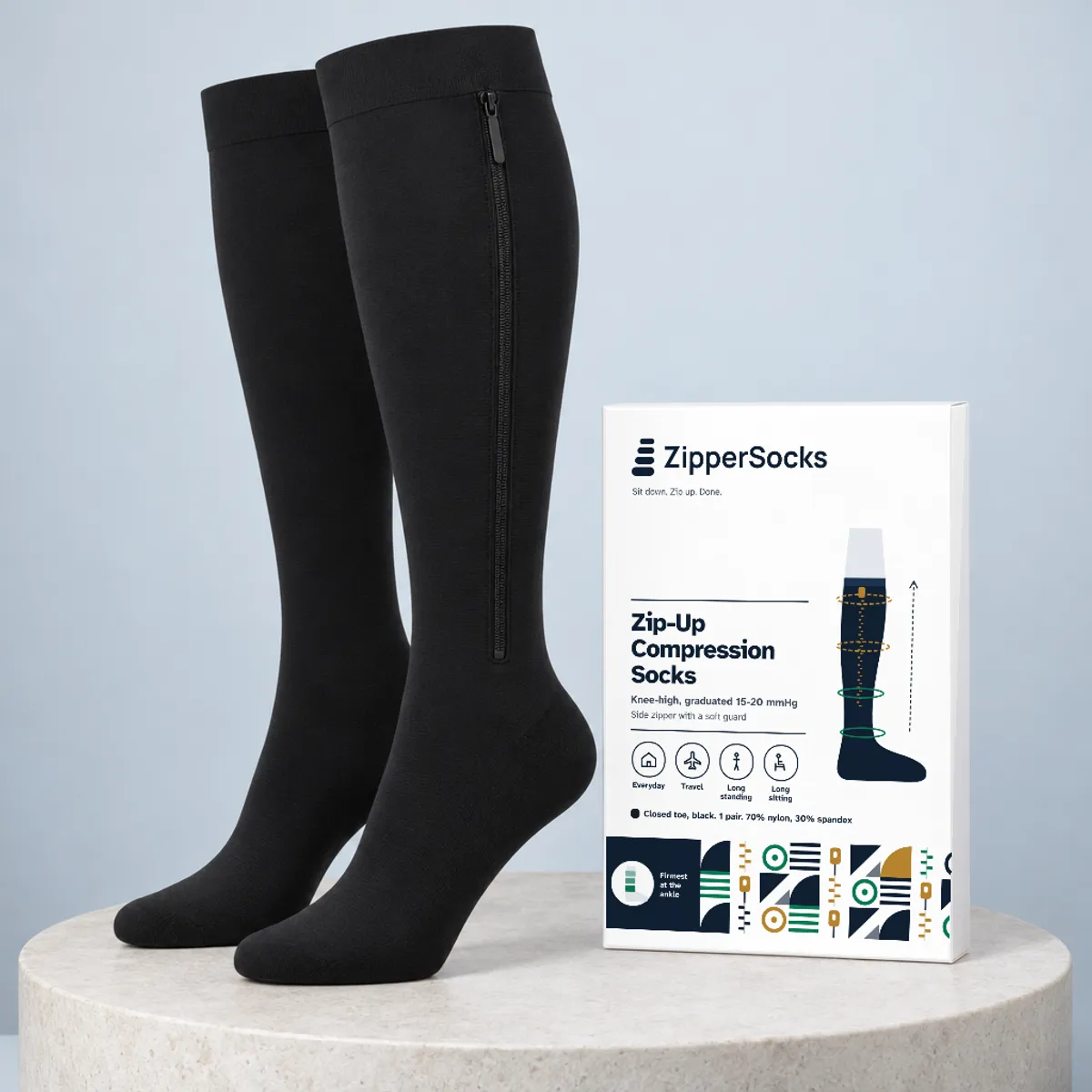
- 15-20 mmHg suits tired, heavy legs, spider veins, and mild symptoms after long days of standing or sitting. Our current zip-up socks are 15-20 mmHg.
- 20-30 mmHg is what many doctors suggest once varicose veins ache or swell regularly. We're adding a firmer 20-30 mmHg version.
Ask your doctor which level fits your veins. The Society for Vascular Surgery also notes that most insurers require you to wear compression stockings for at least three months before they cover other varicose vein treatments, so a doctor's visit early on can save time. See what mmHg means for a plain guide to the numbers.
Venous insufficiency compression socks: making daily wear stick
Compression only helps on the days you wear it. Cleveland Clinic notes that many people with chronic venous insufficiency struggle to wear compression stockings over the long term, and suggests talking with your provider if you do, since a different style may work better.
Simple habits make a difference:
- Wear them during the day and take them off at bedtime, as the NHS advises.
- Put them on in the morning before swelling builds.
- Raise your legs above your heart 3 or 4 times a day, and avoid sitting or standing still for long stretches, as MedlinePlus suggests.
- Replace them every 3 to 6 months so they keep their squeeze.
- Walk often. Cleveland Clinic explains that strong calf muscles help push blood back up the leg veins, and providers may suggest foot and ankle flexing exercises too.
Why a zipper makes everyday wear more realistic
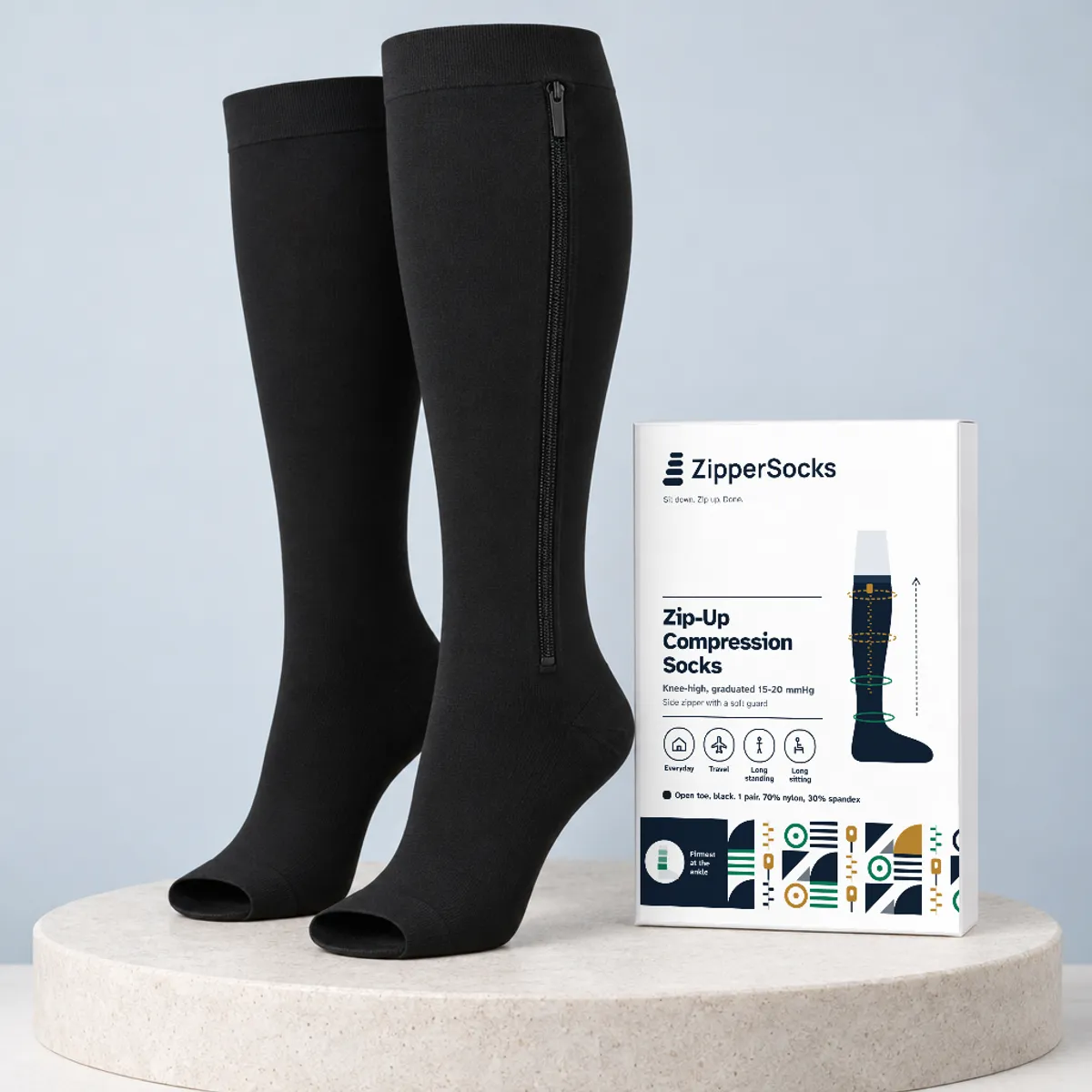
The biggest complaint about compression stockings is getting them on. Our closed-toe zip-up compression socks open along the whole side: slide your foot in, line up the heel, and zip from the ankle to just below the knee. A soft fabric strip sits behind the zipper so it never presses into the skin over a vein. Prefer bare toes in warm weather? The open-toe version works the same way.
Fit still matters, so measure your calf at its widest point using the size guide. Our guide to putting on compression socks shows the steps.
When to see a doctor about varicose veins
A bleeding varicose vein needs urgent care. The NHS advises getting urgent medical help for one.
See a doctor soon if you have:
- A sore on your leg that has not healed after 2 weeks, which can be a venous ulcer
- Skin changes near the veins, such as itching, darkening, dry or scaly patches, or hard, leathery skin
- A sudden increase in pain or swelling, a fever, or a red, tender spot over a vein
- Veins that are painful or getting worse despite self-care
New swelling in one leg with pain or redness can be a blood clot and needs care right away. And the NHS notes compression stockings are not suitable if you have problems with blood flow in your arteries, so mention any circulation problems to your doctor first. If swelling is your main problem, our page on compression socks for swollen ankles and legs goes into more detail.