Compression Socks for Tired, Aching Legs (Standing or Sitting All Day)
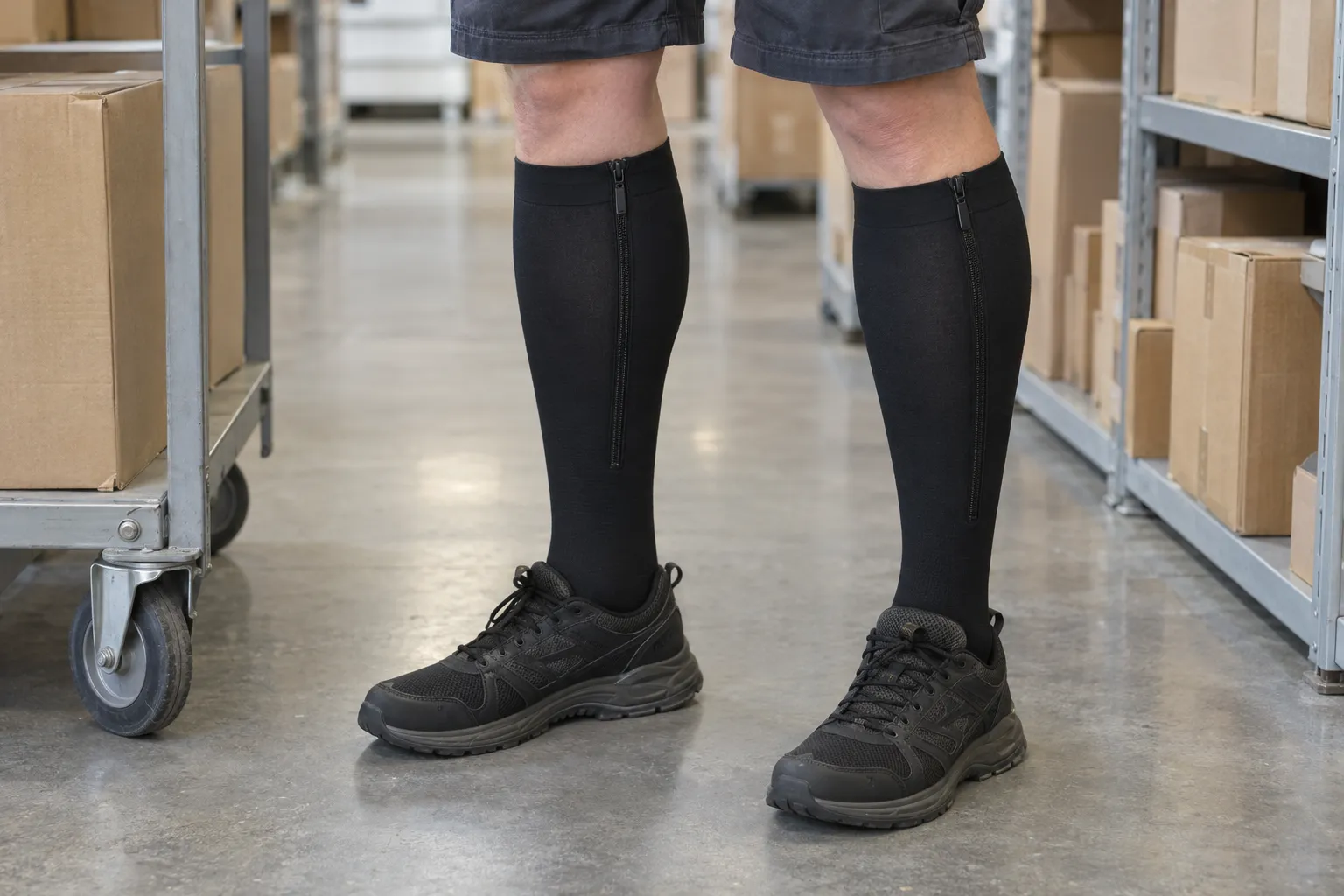
Our zip-up compression socks
-
-
Why standing or sitting all day makes your legs ache
Blood has to travel uphill from your feet to your heart. Walking helps a lot: each step squeezes your calf muscles, which press on the veins and push blood upward. When you stand in one place or sit for hours, that pump slows down.
The Canadian Centre for Occupational Health and Safety (CCOHS) says standing for long periods without walking breaks lets blood pool in the legs and feet, which can cause sore feet, swollen legs and general muscle fatigue. Sitting has a similar effect: Cleveland Clinic lists sitting or standing for long periods among the risk factors for vascular problems, along with age over 50, obesity and smoking.
The result is that familiar evening feeling: heavy calves, puffy ankles, sock marks, and legs that feel older than you are.
Do compression socks help if you stand all day?
Yes, for most people the effect is real, though modest.
- Hairdressers: in a randomized crossover trial of 108 hairdressers, wearing 15-20 mmHg compression stockings lowered pain and swelling scores by about 12% and reduced lower leg volume. Sleep and mood scores improved too.
- Standing and seated workers: a 2018 study measured leg volume at the start and end of the day in people who mostly sat, mostly stood, or did both. With 15-20 mmHg knee-high stockings, end-of-day swelling was lower in all three groups.
- Pooled trials: a meta-analysis of 11 randomized trials found 10-20 mmHg stockings clearly reduced swelling and leg symptoms compared with no treatment, and none of the trials found extra benefit from going above 20 mmHg.
That is why we make our socks at 15-20 mmHg. If you are new to the numbers, read what mmHg means.
Compression socks for work: job by job
The basic advice is the same for everyone. What changes is the shoe, the schedule and how much you get to move.
Office workers and anyone sitting all day
Desk days keep your knees bent and your calves still. Wear the socks from your commute onward, stand up at least once an hour, and do a few heel raises at your desk. Beige under light trousers or black under dark ones looks like a regular sock.
Truck drivers
Long hours on the road mean hours of sitting. Put the socks on before your first drive, walk a lap around the truck at every stop, and flex your ankles at red lights. Closed toe in black works with work boots.
Flight attendants
You get standing, walking and sitting, all in a pressurized cabin with long duty days. Put them on before you report and wear them through the trip. Our compression socks for travel page covers flying in more depth.
Teachers
Hours standing at the board or walking between desks, often on hard floors. Supportive shoes and compression socks together can help your legs last until the final bell.
Hairdressers
Standing in one spot behind the chair is exactly what the hairdresser trial studied. Wear them every working day, and use breaks between clients to walk or sit with your feet up.
Retail, warehouse and factory work
Concrete floors and long shifts. CCOHS recommends cushioned insoles on hard floors and changing position often, on top of compression.
Nurses and healthcare workers have their own page: compression socks for nurses.
Other habits that help tired legs
- Change position often. CCOHS advises switching between positions so you are not in any one for long.
- Wear supportive shoes. Arch support and a cushioned insole help on hard floors.
- Move your calves. Heel raises, ankle circles and short walks get the calf pump working.
- Put your feet up in the evening. MedlinePlus suggests raising your legs above the level of your heart while lying down to bring swelling down.
- Cut back on salt. MedlinePlus notes a low-salt diet may reduce fluid buildup.
How a zipper fits into a busy workday
The best sock is the one you wear every day. Regular compression socks are hard to pull over the heel, and that struggle is where a lot of good intentions end, especially on a rushed morning.
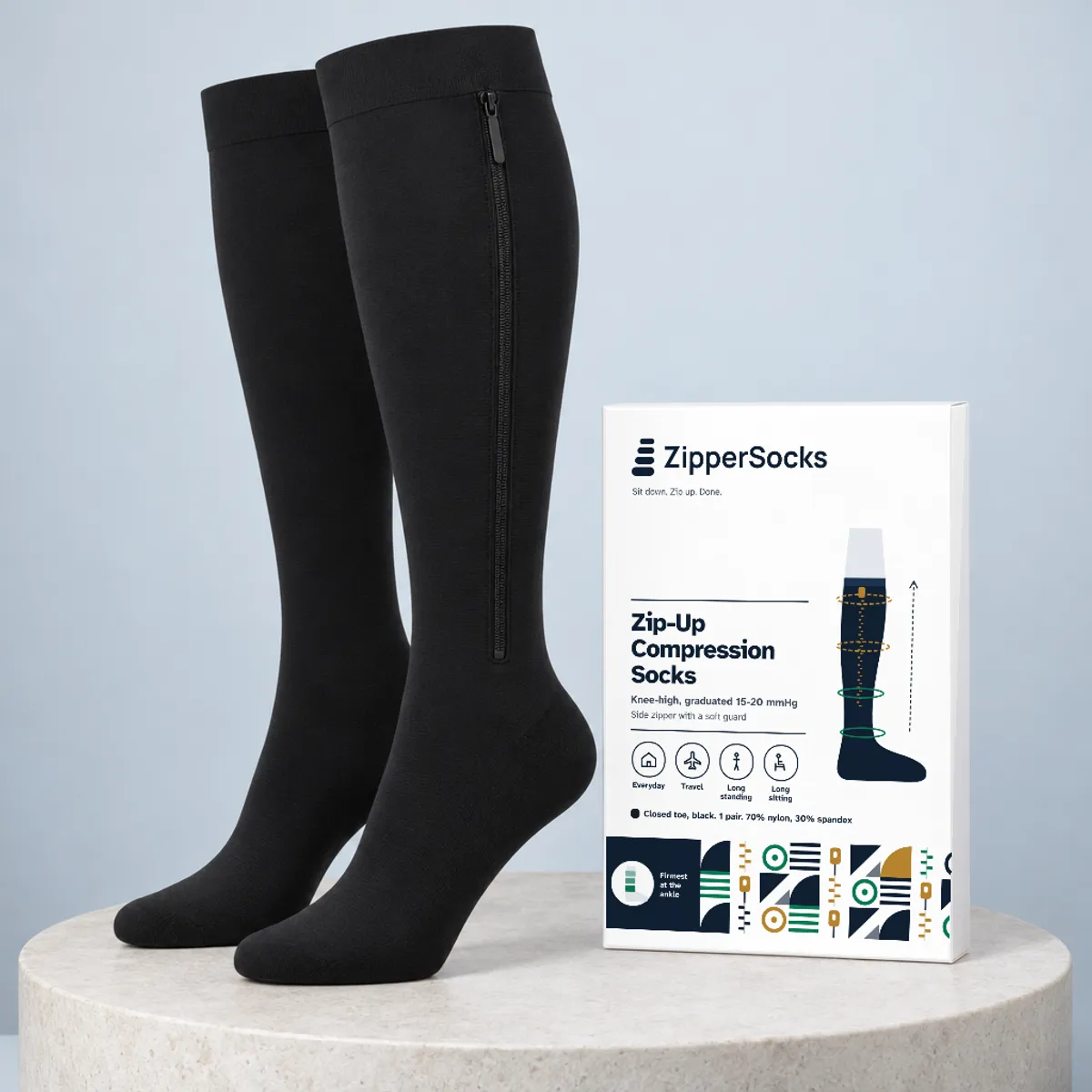
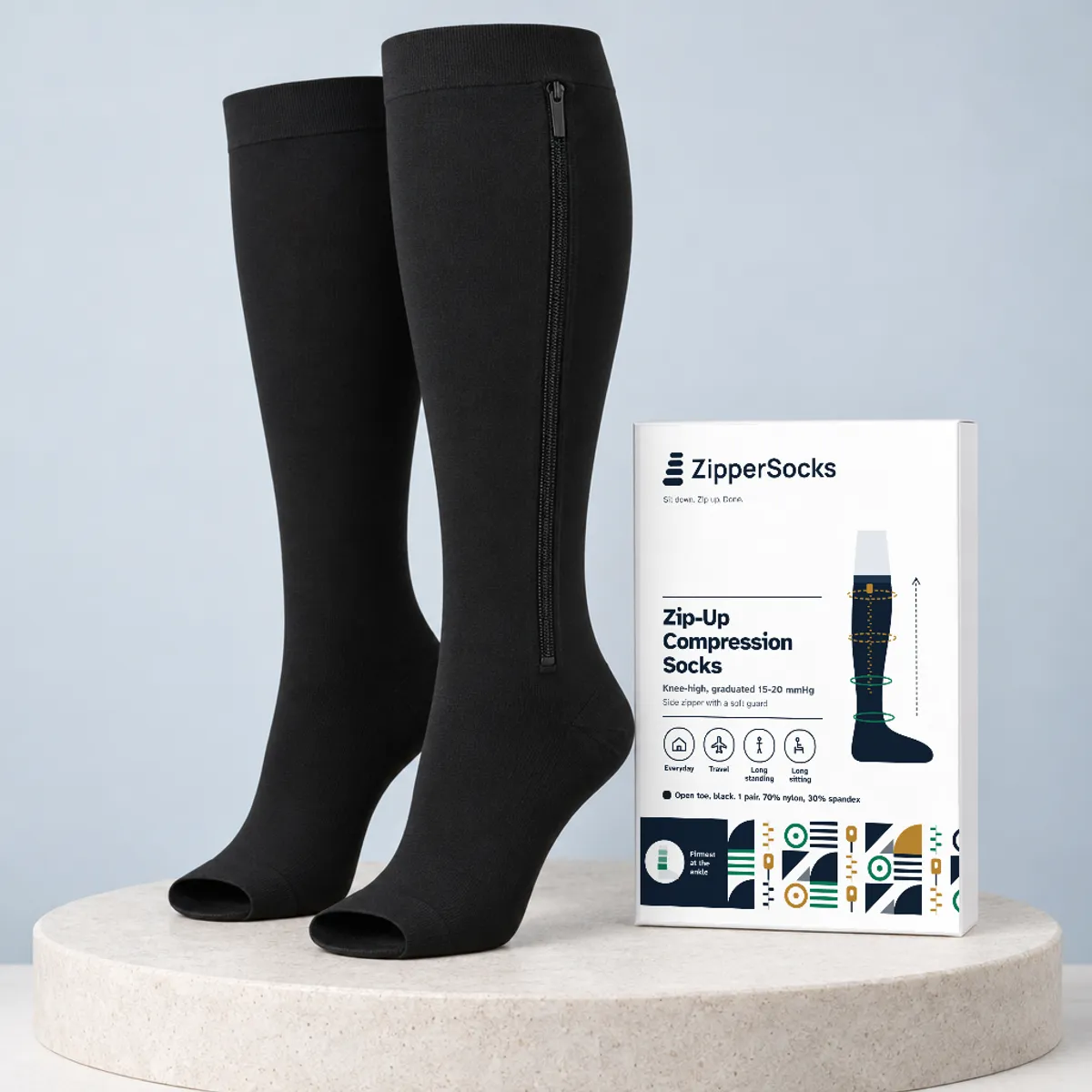
Our socks have a full-length side zipper. You open the sock, place your foot, and zip it closed. A soft fabric guard sits behind the teeth, so the zipper does not press on your skin. When you get home, you unzip and step out, even if your ankles have swelled over the day.
Our closed-toe zipper compression socks come in black and beige, sized by calf from M to 3XL.
When aching legs need a doctor, not a sock
Ordinary end-of-day heaviness in both legs is common. Some signs are not. Contact a doctor right away if:
- You have new or worse swelling in one leg only
- The leg is red, warm or very painful
- You have a fever along with the swelling
Call 911 if you have chest pain or feel short of breath.
Compression is also not suitable if you have problems with blood flow in your arteries. Read who should not wear compression socks before you start if you have a circulation problem, diabetes with numb feet, or heart failure.