Compression Socks for Travel and Long Flights
Compression socks are not right for everyone. If you have peripheral arterial disease, poor circulation in the legs, heart failure, skin infections or open wounds, or reduced feeling in your feet, talk to your doctor before wearing them.
Our zip-up compression socks
-
-
Why your legs swell when you sit still on a flight
Your calf muscles act like a pump. Every time you walk, they squeeze the veins in your lower legs and push blood back up toward your heart. In an airplane seat, that pump mostly switches off. You sit for hours with your knees bent and your feet down, and fluid settles around your ankles and feet.
MedlinePlus lists long flights and car rides among the common causes of leg and ankle swelling. This kind of swelling usually affects both feet and goes down once you walk around and put your feet up.
Compression socks press gently on the lower leg, firmest at the ankle, which helps keep blood and fluid moving while you cannot. Our explainer on what compression socks do covers the basics.
Compression socks for flying and DVT: what the research says
A DVT is a blood clot in a deep vein, usually in the leg. The CDC says anyone traveling more than four hours, whether by air, car, bus or train, can be at risk. For most healthy travelers the risk is low: one study cited in the CDC Yellow Book found about 1 clot for every 4,656 passenger flights longer than four hours.
A Cochrane review pooled trials of airline passengers on flights of more than five hours. People who wore compression stockings had far fewer symptom-free DVTs than people who did not (3 cases compared with 47), and the reviewers rated that evidence as high certainty. Stockings also seemed to reduce leg swelling, though that evidence was weaker. No clots with symptoms happened in any of the trials, so they cannot show an effect on those, and no one can promise a sock prevents DVT.
The CDC Yellow Book also summarizes guidance that suggests properly fitted below-the-knee stockings giving 15-30 mmHg at the ankle for long-distance travelers at increased risk. Our socks are 15-20 mmHg, within that range.
Who has a higher risk
The CDC says most people who get a travel-related clot have at least one other risk factor, such as:
- Older age (risk rises after 40)
- Obesity
- Recent surgery or injury
- Estrogen birth control or hormone therapy
- Pregnancy, or having had a baby in the past 6 weeks
- A previous blood clot or a family history of clots
If any of these apply to you, talk to your doctor before a long trip. They may suggest a specific compression level or other steps. Get urgent help if you have swelling and throbbing pain in one leg after travel, and call 911 if you have chest pain or feel short of breath.
Best compression socks for travel: what to pack
- 15-20 mmHg, knee-high. Enough to help with travel swelling, available without a prescription.
- The right size. A sock that is too loose does little; one that is too tight digs in during a long sit. Measure your calf with our size guide before you order, not the night before you fly.
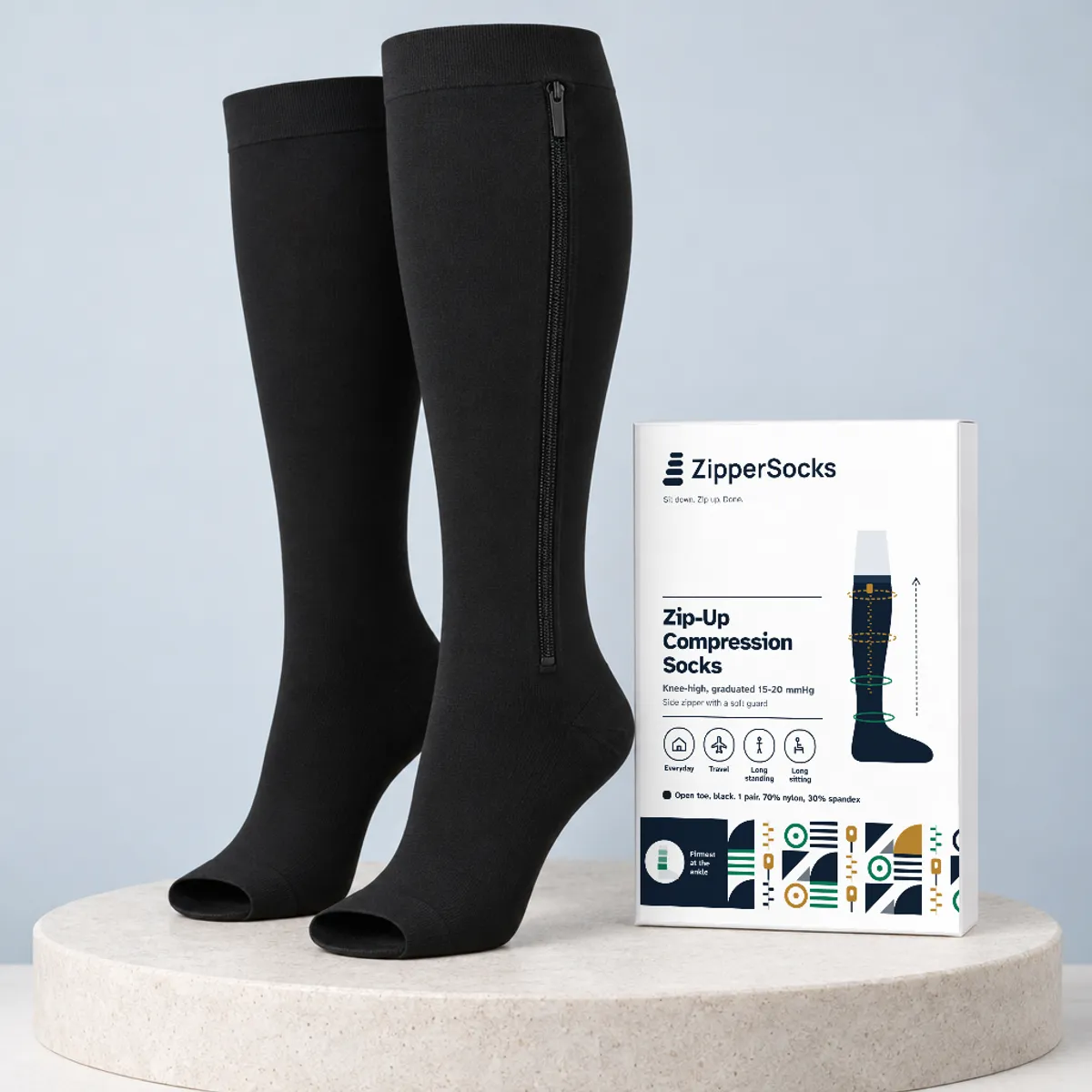
- Closed or open toe. Closed toe is the easy choice for a cool cabin and airport walking. Open-toe zipper compression socks suit warm destinations and sandals.
- Two pairs for long trips. Wear one while the other is washed and drying.
When to put on compression socks for a long flight
Put them on before you leave for the airport. MedlinePlus advises putting compression stockings on in the morning, when your legs are least swollen, and the same idea applies on a travel day: start the trip with them already on.
Keep them on for the whole flight, including the time you spend waiting at the gate. Take them off once you reach your bed at the other end. The NHS advises wearing compression stockings during the day and taking them off at bedtime. If you are on an overnight flight and wondering about sleeping in them, read can you sleep in compression socks.
On a multi-day road trip, put them on each morning before you drive and take them off at night.
Keep moving and drinking water on long flights
Socks work best alongside a few simple habits:
- Move your legs often. The CDC advises moving your legs frequently and working your calf muscles on long trips. Try ankle circles, heel raises and toe lifts regularly while you sit.
- Walk when you can. The NHS suggests walking around when possible. The CDC Yellow Book notes aisle seats have been linked with lower risk than window or middle seats, likely because it is easier to get up.
- Drink water and go easy on alcohol. The NHS recommends plenty of water and avoiding alcohol. The CDC Yellow Book notes alcohol can make you less likely to move around.
- Wear loose clothing. Tight waistbands and jeans add to the squeeze where you do not want it.
Why a zipper helps in a cramped seat or an airport restroom
Pulling on a tight compression sock takes room to bend and a firm grip. An economy seat or an airport restroom stall gives you neither.
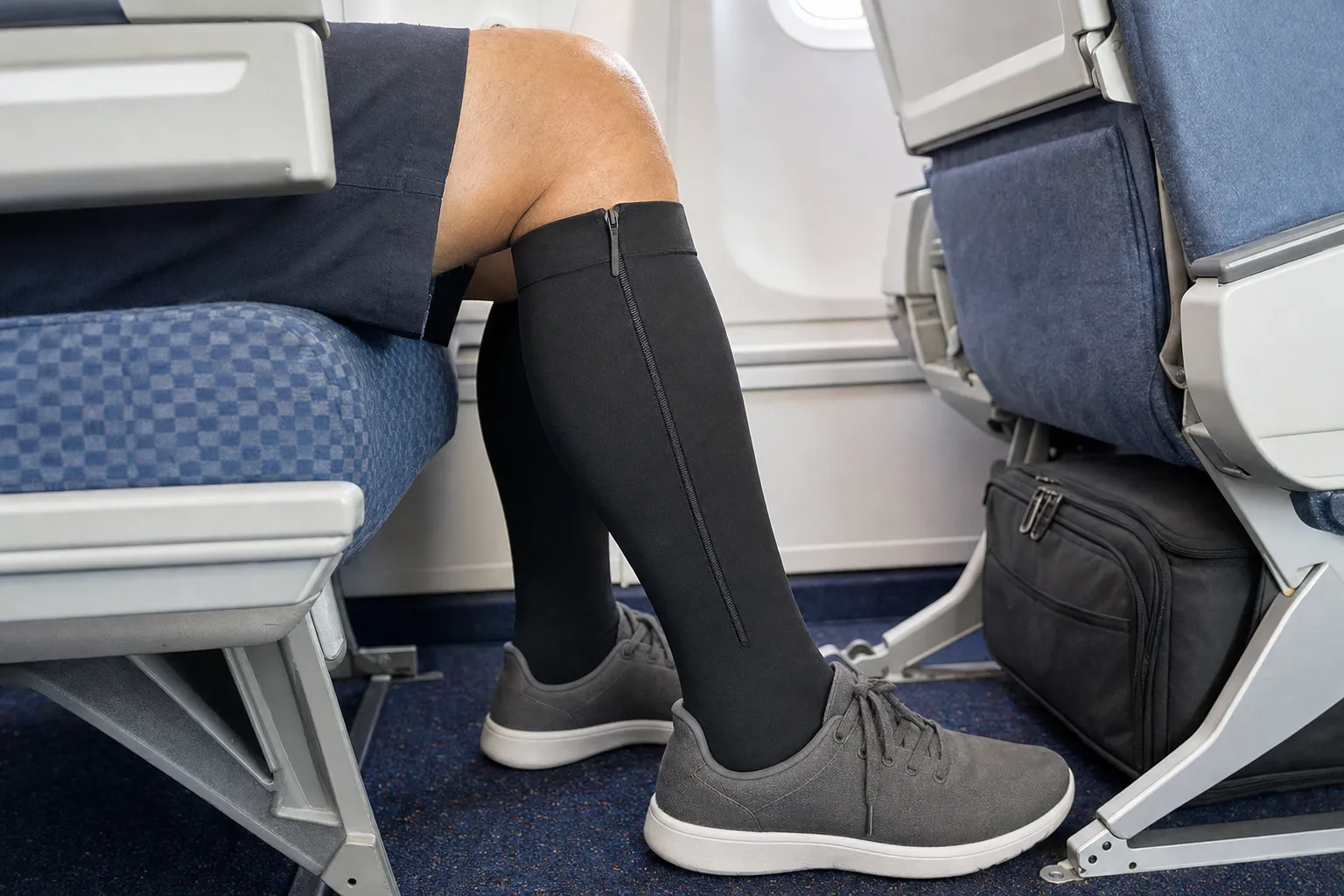
With a full-length side zipper you can put the socks on at the gate, or in a bathroom after security, sitting down with your foot on your knee. Open the sock, place your heel, zip up the side. A soft fabric guard behind the teeth keeps the zipper off your skin.
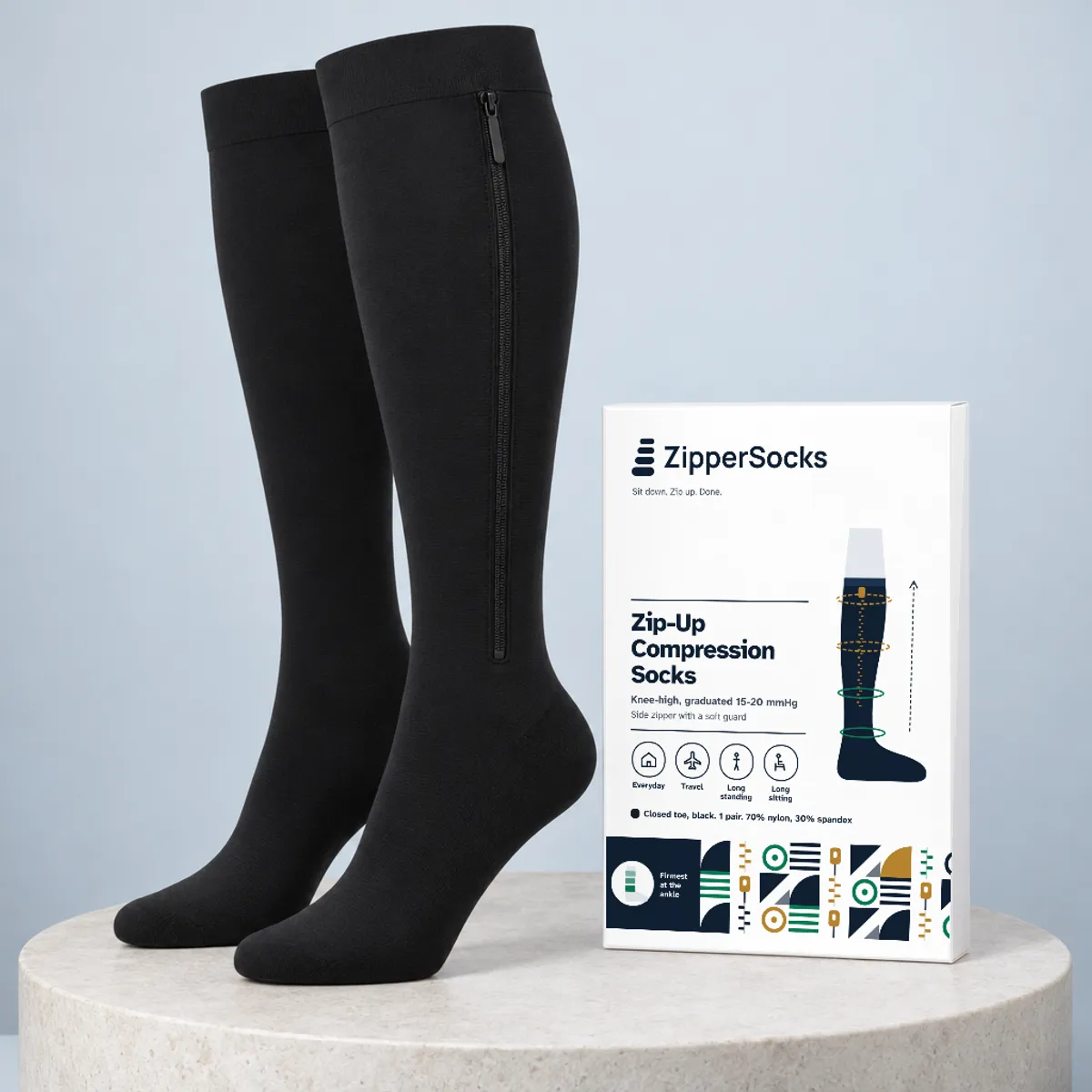
Taking them off at a hotel late at night is just as quick, even when your ankles are puffy after a long day of travel. Our closed-toe zipper compression socks come in black and beige.