Zipper Compression Socks for Nurses and Healthcare Workers
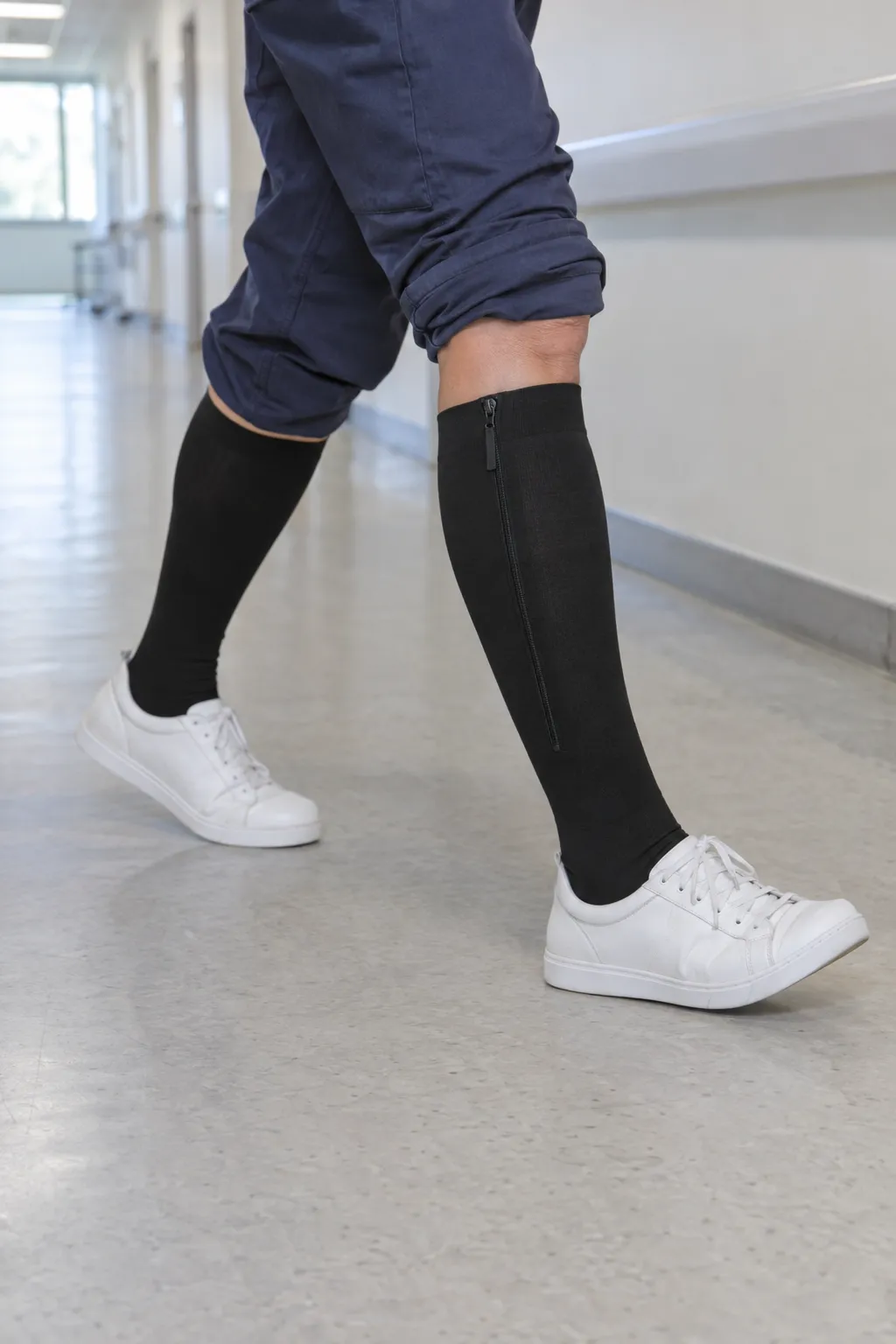
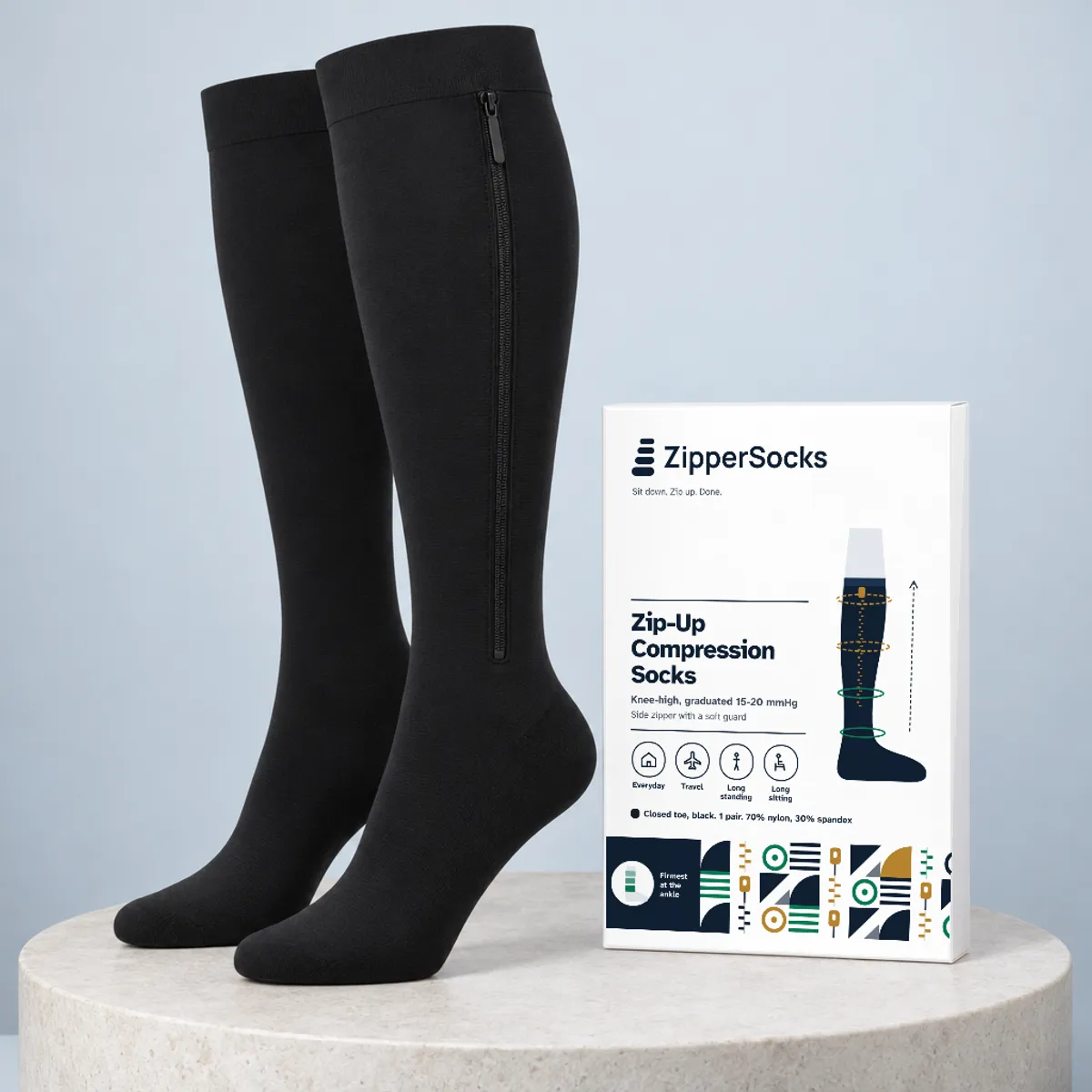
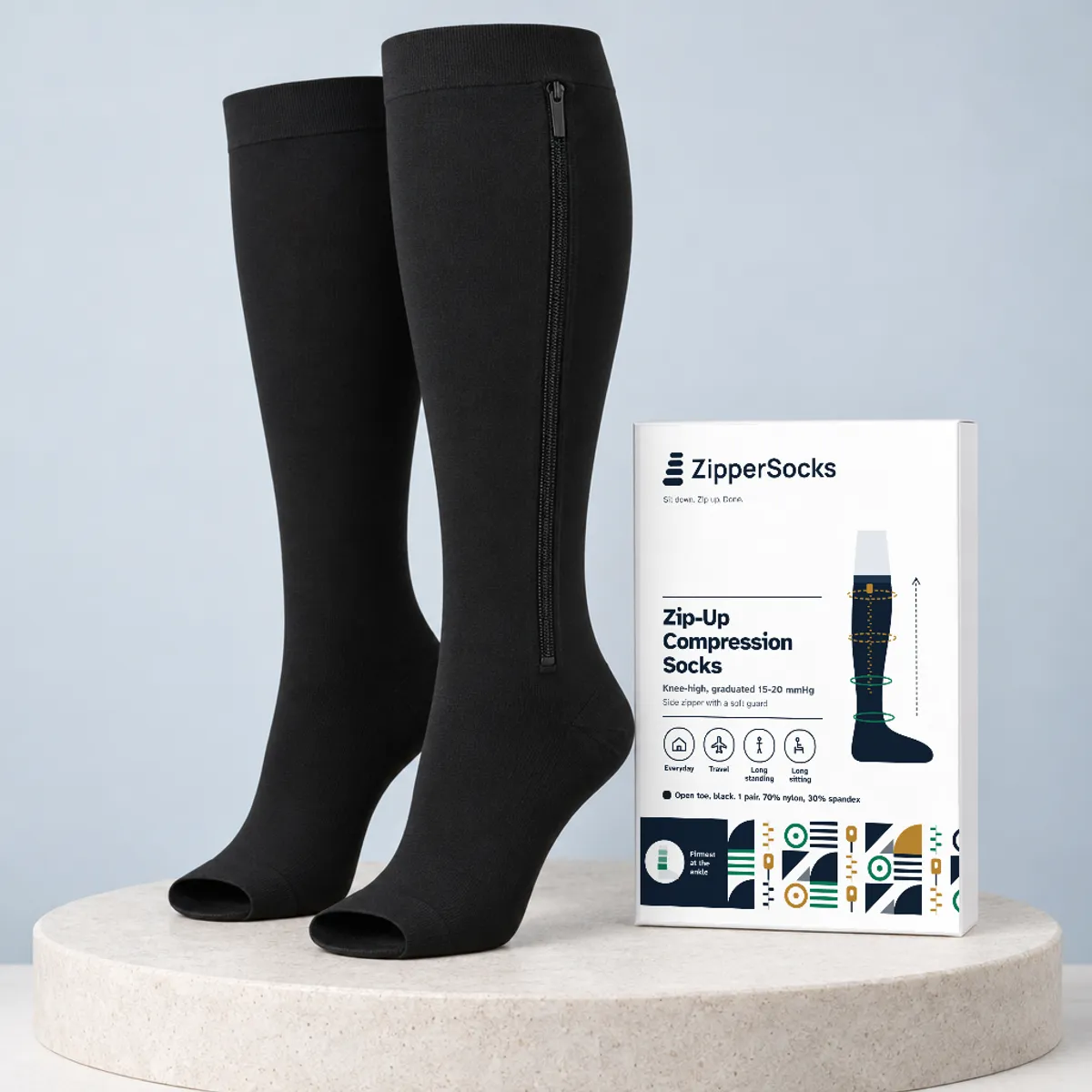
Our zip-up compression socks
-
-
Why nurses' legs hurt after a 12-hour shift
Nursing is not just standing. It is standing at the bedside, at the med cart and at the charting station, then walking the length of the unit, often for 12 hours with short breaks. By the end, many nurses notice sock marks, puffy ankles and a heavy, dull ache in the calves.
The Canadian Centre for Occupational Health and Safety (CCOHS) explains why. Standing for long stretches without walking breaks lets blood pool in the legs and feet. Over time, that can lead to sore feet, swollen legs, and varicose veins with inflammation. Walking helps because your calf muscles pump blood back up, but a shift rarely lets you walk as much as you stand.
Small movements still count. When you are stuck at a bedside or a workstation, rise up onto your toes a few times, shift your weight, or take the long way to the supply room. CCOHS also recommends shoes with arch support and real rest breaks.
Do compression socks help nurses? What the research shows
The evidence is encouraging, though most studies are small.
- A 12-month randomized trial followed 75 healthcare professionals working 6-hour standing shifts. Leg volume went up across the shift in the group without stockings and went down in the group wearing graduated compression stockings, at every check over the year. The compression group also reported better leg-related quality of life.
- A review of occupational leg swelling studies concluded that compression stockings reduce work-related swelling and the symptoms that come with it, and recommended them for workers at higher risk, while noting how few studies there are.
- A pilot trial in nursing students found knee-length and thigh-length stockings performed about the same, with high satisfaction in both groups. The authors suggested knee-length stockings for clinical training.
Put plainly: for a healthy nurse, compression socks are a comfort tool. They can mean less swelling and less aching at the end of a shift. They are not a treatment for vein disease, and they do not replace breaks, good shoes or moving when you can.
Best compression socks for nurses: what to look for
- 15-20 mmHg graduated compression. Within the 10-20 mmHg range that a meta-analysis of randomized trials found reduced swelling and leg symptoms, and available without a prescription. See what mmHg means for compression socks.
- Knee-high. In the nursing student trial, knee-length did as well as thigh-length, and it is far easier to wear under scrubs.
- Closed toe. Our closed-toe zipper compression socks sit in clinical shoes and clogs like a normal sock.
- Black. It disappears under navy, black, gray and most colored scrubs.
- The right size. Measure your calf at its widest point, in the morning, and use our size guide. Between sizes, go up one.
On fast before a shift, off fast after
MedlinePlus advises putting compression stockings on in the morning, before your legs swell. For a 7 a.m. start, that means doing it in a hurry. With a side zipper, you sit on the bench, put your heel in place and zip up. No tugging, no fighting a tight cuff over your heel with cold hands.
The bigger relief is at the end. After 12 hours your legs are at their puffiest, and peeling a regular compression sock off a swollen ankle is the last thing you want to do. Unzip, and it is off. A soft fabric guard runs behind the zipper teeth, so nothing metal sits against your skin all shift.
On nights, the same rule applies in a different order: put them on before you leave home for your shift, and take them off when you go to bed afterward. Our guide on how to put on compression socks shows how to line up the heel so the pressure sits where it should.
Washing compression socks when you wear them every shift
MedlinePlus recommends washing compression stockings every day and having at least two pairs so you can rotate them. It also notes they lose compression over time and should be replaced every 3 to 6 months.
For our socks:
- Zip them fully closed so the teeth do not snag other clothes.
- Put them in a mesh laundry bag.
- Machine wash cold.
- Hang to dry instead of using the dryer.
If you work three or four shifts in a row, have enough pairs to get through the run without wearing a pair twice before it is washed.
Compression socks for healthcare workers and doctors
The same reasoning applies to anyone who spends a shift on their feet: CNAs, techs, therapists, pharmacists, surgeons and doctors on long clinic or OR days. If you stand still for long stretches, you are the person the occupational studies were about.
Some healthcare workers already have varicose veins or a history of leg swelling. If that is you, our page on compression socks for varicose veins covers what compression can and cannot do.
Compression is not suitable if you have problems with blood flow in your arteries. If you have peripheral arterial disease, reduced feeling in your feet or skin wounds on your legs, check with your doctor before wearing them.