Compression Socks for Diabetics: What's Safe and What to Ask Your Doctor
Many people with diabetes can wear light compression socks, but only after a doctor has checked the circulation in their legs. Check with your doctor first. Compression socks are not for people with peripheral arterial disease (PAD) or poor circulation in the legs.
That matters more with diabetes than for most people, because PAD and nerve damage are both common diabetes complications. This page explains the difference between diabetic socks and compression socks, why PAD and neuropathy change the picture, and how to check your skin if your doctor says compression is fine for you.
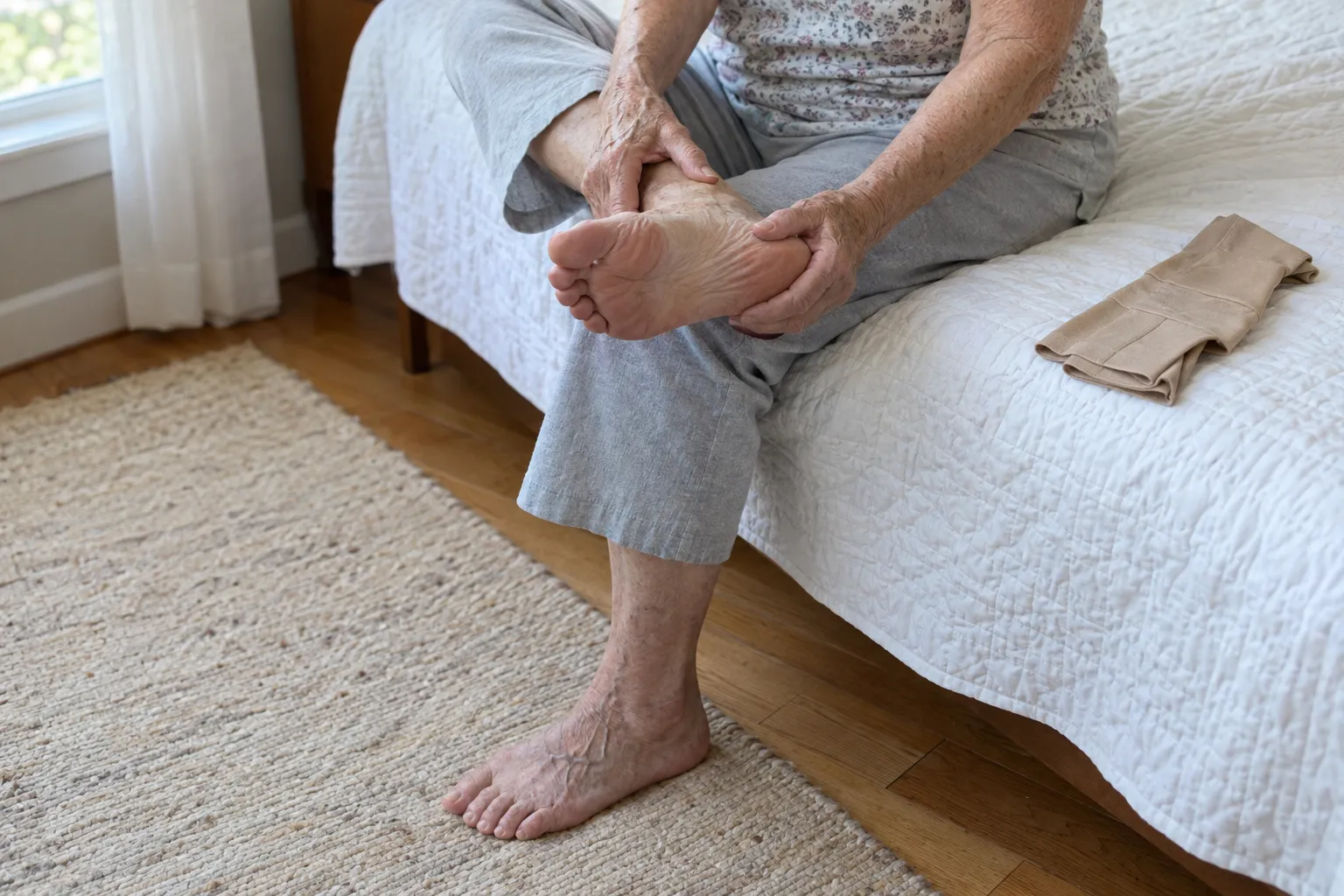
Check with your doctor first. Compression socks are not for people with peripheral arterial disease (PAD) or poor circulation in the legs.
Our zip-up compression socks
-
-
Can diabetics wear compression socks?
Check with your doctor first. Compression socks are not for people with peripheral arterial disease (PAD) or poor circulation in the legs.
There is no single yes or no. Some people with diabetes are advised to wear light compression for swollen ankles or vein problems. Others should not wear it at all. Health sources are cautious for good reasons:
- The American College of Obstetricians and Gynecologists notes that some people, such as those with diabetes or problems with blood circulation, should not wear compression stockings, and advises talking with a health care professional first.
- The National Institute of Diabetes and Digestive and Kidney Diseases (NIDDK) foot-care advice says not to wear tight socks or elastic stockings, as a general rule for people with diabetes.
- Cleveland Clinic says that with diabetes-related neuropathy, your provider needs to weigh the risks and benefits of compression stockings carefully.
So the decision belongs to your doctor, who knows your circulation and your feet. Also see your provider promptly if you have diabetes and your feet, ankles or legs are swollen; the NHS lists this as a reason for an urgent appointment. Our page on swollen ankles and legs lists other swelling warning signs.
Diabetic socks vs compression socks
These are two different products that are often confused.
| Diabetic socks | Compression socks | |
|---|---|---|
| Main job | Protect the foot and avoid pressure | Gently squeeze the leg to help with swelling and vein symptoms |
| Fit | Loose, non-binding top so they are not constricting | Snug, graduated pressure, firmest at the ankle |
| Compression | None | Measured in mmHg, for example 15-20 |
| Who it is for | Designed for people with diabetes | Should be cleared by your doctor if you have diabetes |
The American Diabetes Association (ADA) describes diabetic socks as having a looser elastic area around the ankle so they are not too constricting. It also suggests socks that fit without constricting, keep moisture off the skin, and are light-colored so you can spot any bleeding or drainage. Our zip-up socks are compression socks, not diabetic socks.
Why PAD matters if you have diabetes
Peripheral artery disease means the arteries that carry blood to your legs and feet are narrowed. The ADA notes that many people with diabetes have PAD, which reduces blood flow to the feet, and the National Heart, Lung, and Blood Institute lists diabetes as a condition that raises the risk of PAD. Risk also rises with age.
Compression adds pressure from the outside. On a leg that already gets too little blood, that can do harm instead of good. Cleveland Clinic notes that providers may run tests to check for PAD in people with leg vein problems, and that people with PAD need to be careful with compression therapy. Ask your doctor directly: "Is the blood flow in my legs good enough for compression socks?" Our article on who should not wear compression socks lists the other conditions to rule out.
Compression socks and diabetic neuropathy: check your skin
The CDC says about half of all people with diabetes have some kind of nerve damage, most often in the feet and legs. If you don't feel pain in your feet, you may not notice a cut, blister or sore. The same goes for a sock that is too tight: you may not feel it digging in.
If your doctor clears you for compression, make skin checks part of the routine:
- Every evening, take the socks off and look at your legs and feet, including the soles and between the toes. The CDC and ADA both advise checking your feet every day. Use a mirror or ask someone to help.
- Look for deep marks that don't fade, redness, blisters, sores, or skin that looks pale, blue or darker than usual.
- Stop and call your provider if you see any of these, or notice numbness, tingling or more swelling, which Cleveland Clinic lists as reasons to remove compression socks.
Choosing a level: light 15-20 mmHg, only with your doctor's OK
When a doctor agrees compression is fine for someone with diabetes, light compression of around 15-20 mmHg is the usual starting level. Do not move to a firmer level unless your doctor prescribes it. Our guide to what mmHg means explains the numbers.
Fit matters as much as the number. A sock that is too small presses harder than intended. Measure your calf at its widest point and size up if you are between sizes; the size guide shows how. MedlinePlus also advises not letting stockings bunch or wrinkle, since folds create pressure points.
How a zipper fits a diabetic foot-care routine
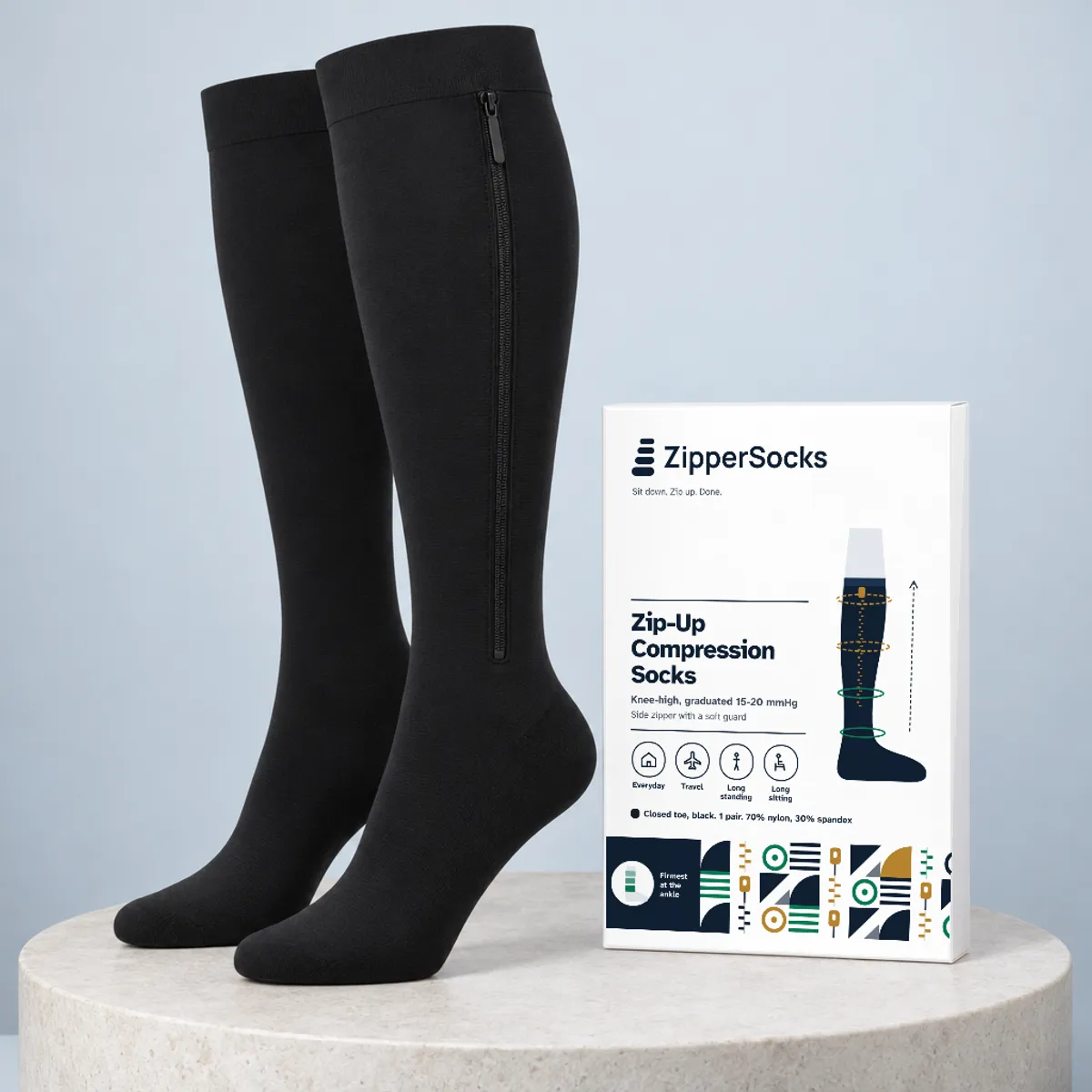
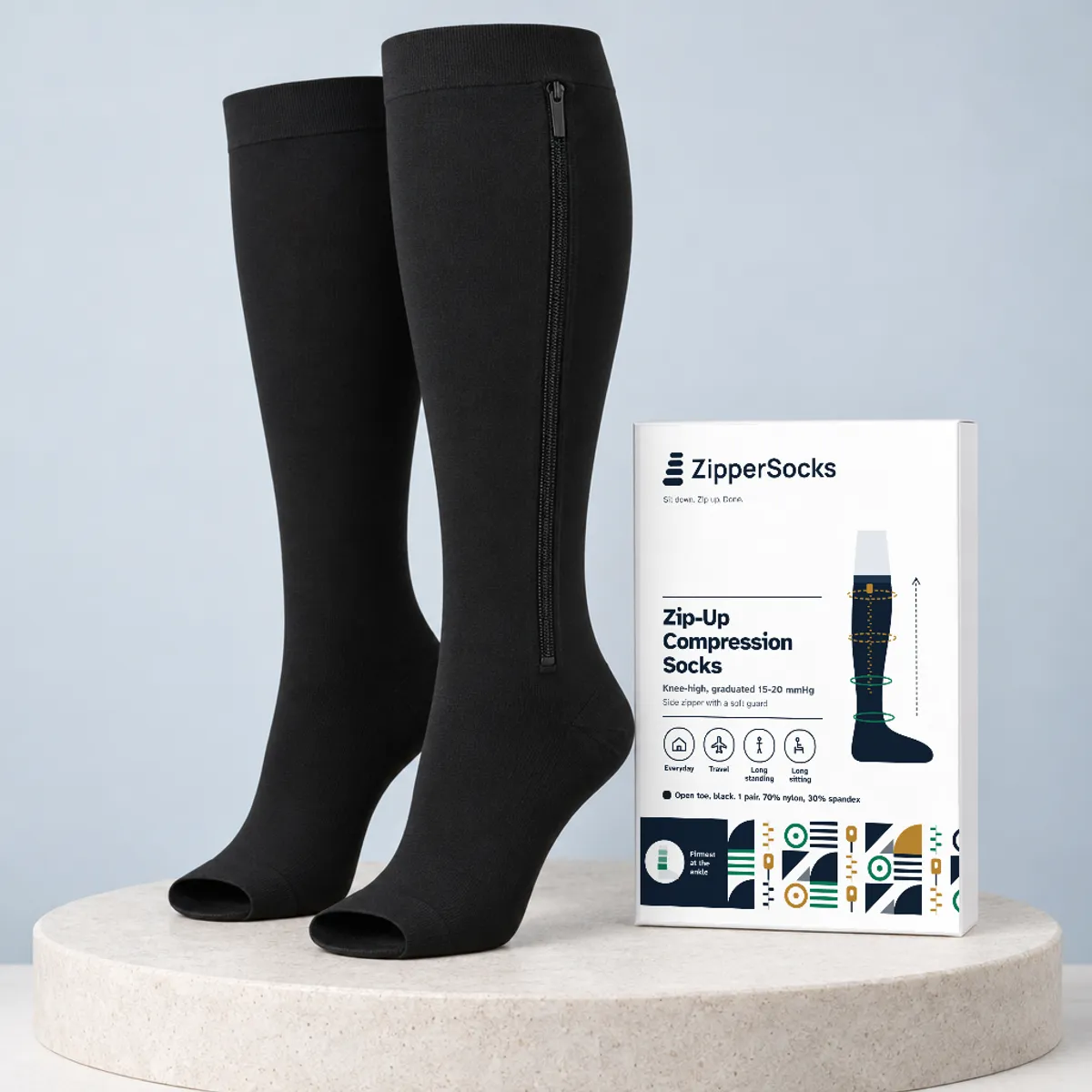
The daily foot check is easier when the sock comes off in one pull. Unzip our closed-toe zip-up compression socks and the leg is open for inspection, without peeling a tight tube down over the heel. Putting them on is gentler too: there is less dragging of fabric across dry or delicate skin, and a soft fabric guard keeps the zipper teeth off your leg.
The CDC advises always wearing shoes and socks or slippers, even indoors. Compression socks do not replace that, or your regular foot exams. Our step-by-step guide on putting on compression socks covers smoothing out wrinkles, which matters when you can't rely on feeling.