Zipper Compression Socks for Men
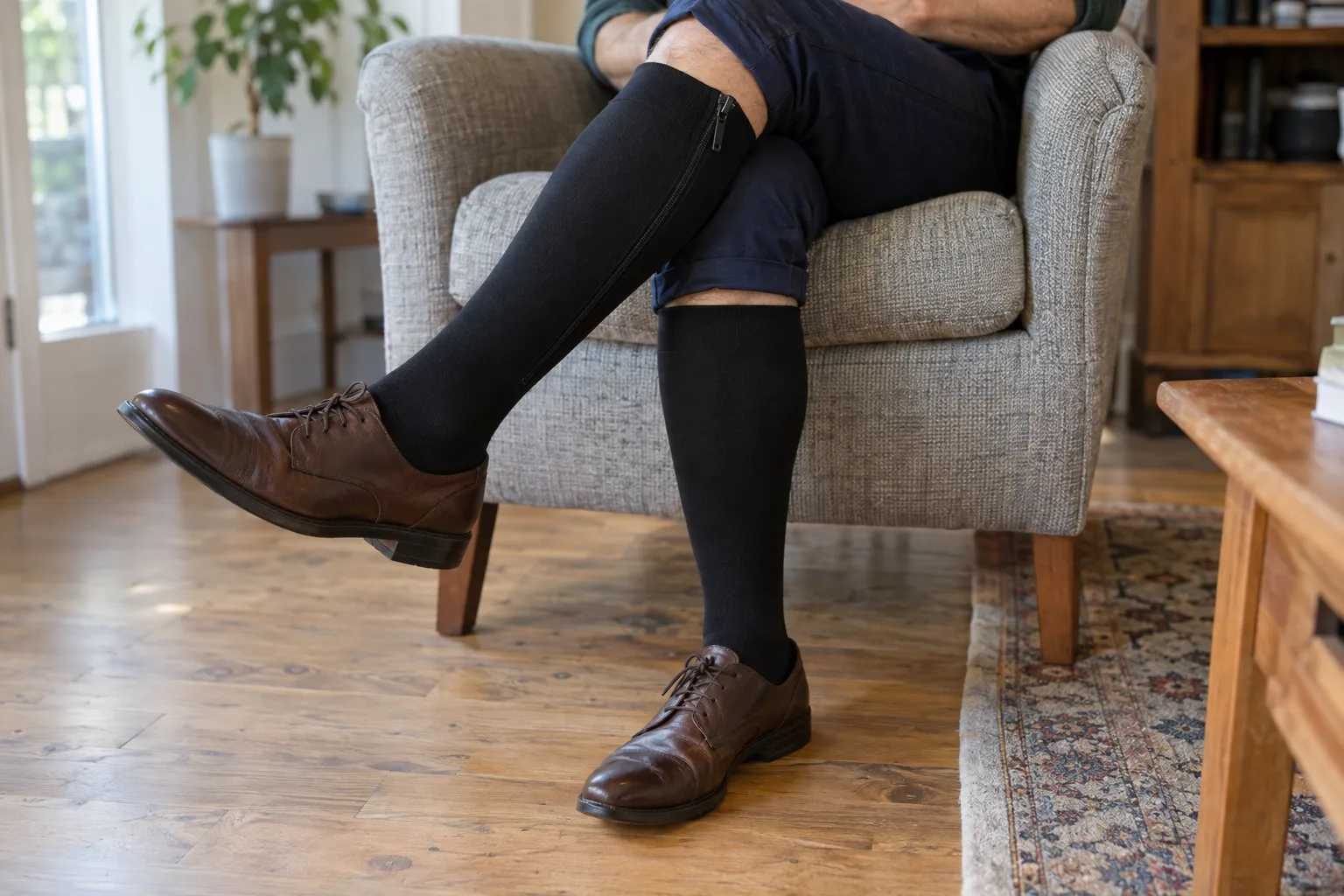
Our zip-up compression socks
-
-
Why men's legs get tired and heavy
Leg swelling and varicose veins are often talked about as a women's issue, but men get them too. The NHS lists getting older, carrying extra weight and spending a lot of time standing or sitting among the risk factors for varicose veins. Cleveland Clinic says vascular problems are more common in adults over 50 and in people who sit or stand for long periods, smoke, or are not very active.
Standing work is a big part of it. The Canadian Centre for Occupational Health and Safety (CCOHS) explains that standing for long stretches without walking breaks lets blood pool in the legs and feet, which can lead to sore feet, swollen legs and, over time, varicose veins. Long hours behind the wheel or at a desk keep the calf muscles still too.
Low-level compression helps with the symptoms. A meta-analysis of 11 randomized trials found that stockings at 10-20 mmHg clearly reduced swelling and leg symptoms compared with no treatment or placebo stockings.
Best compression socks for men who work on their feet
If you are on a job site, a shop floor, a warehouse or a retail floor, the sock has to survive boots and a full day.
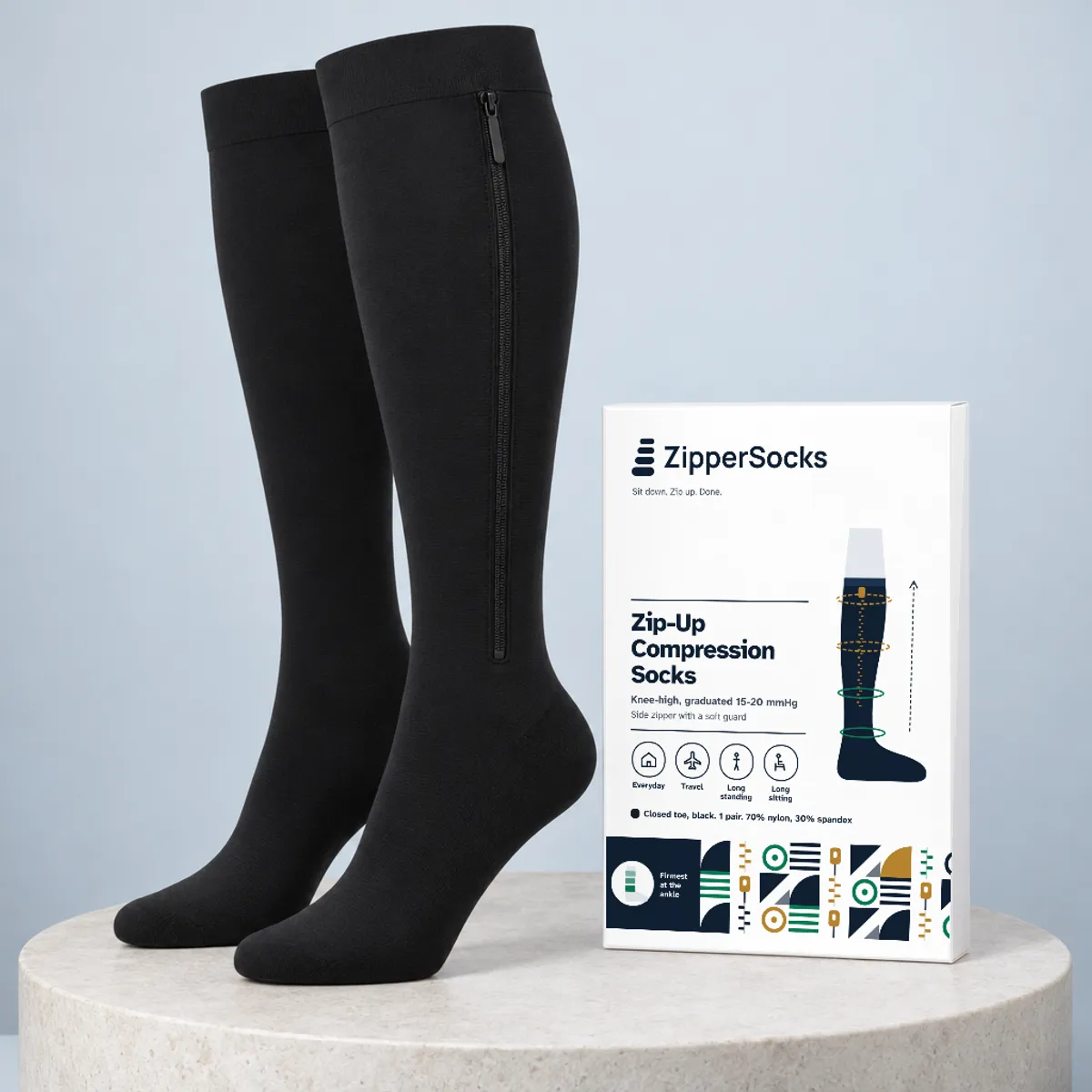
- Closed toe, black. Our closed-toe zipper compression socks look like a plain dark work sock above the boot.
- Put them on before your boots. Zip fully closed, fold the pull tab flat against the fabric, then lace up as normal.
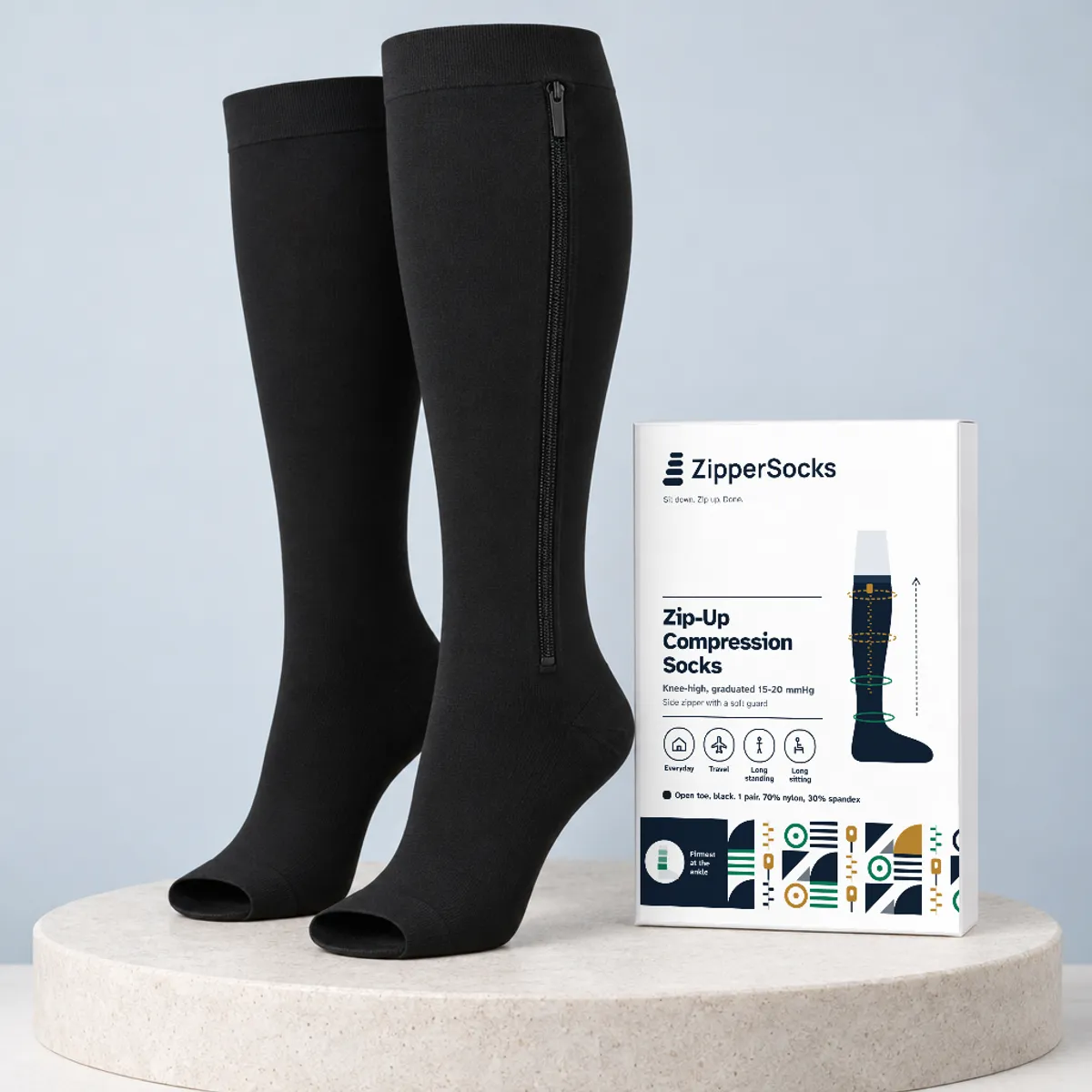
- Thin, stretchy fabric. At 70% nylon and 30% spandex, they are thinner than a cushioned work sock. If your boots fit snug, try them on with the socks before a full shift.
- Keep your other habits. CCOHS recommends changing position often, shoes with arch support, cushioned insoles on concrete or metal floors, and real rest breaks. Compression adds to those, it does not replace them.
Men's knee-high compression socks for larger calves
Men's calves come in every size, and a muscular calf can make a standard sock dig in at the top band. We size by calf circumference at the widest point:
| Size | Calf (inches) |
|---|---|
| L | 11 to 13 |
| XL | 13 to 16 |
| 2XL | 16 to 18 |
| 3XL | 18 to 20 |
Measure sitting down, in the morning, around the fullest part of the calf. If you are between sizes, go up one. The full chart, including size M, is in our size guide. If you are near the top of the range, our page on wide-calf compression socks goes into fit in more detail.
Zipper compression socks for men: on in seconds, off without a fight
Plenty of men try compression socks once, spend five minutes hauling a tight tube over the heel, and never wear them again. Big hands, a stiff lower back and a 5 a.m. start do not help.
A full-length side zipper changes the job. Open the sock, set your heel, zip it up the outside of your leg. A soft fabric guard runs behind the teeth so the zipper does not rub your skin. After a shift, when your legs are at their most swollen, you unzip and you are done.
The fit still matters. Line up the heel first, then zip, then smooth out any wrinkles. Our guide on how to put on compression socks walks through it.
Long drives, flights and desk days
Sitting still for hours is the other half of the problem. The CDC says anyone traveling more than four hours, by air, car, bus or train, can be at risk of blood clots, and that the risk rises with age, with risk increasing after 40. Most people who get a travel-related clot also have another risk factor, such as recent surgery, obesity or a past clot.
Wear your socks for the whole drive or flight, get up or stop every so often, and work your calves while you sit. Our page on compression socks for travel covers long flights in detail. Talk to your doctor before a long trip if you think you have a higher risk of clots.
Compression socks for men over 50
After 50, legs often feel heavier by evening, and bending down to pull on a tight sock gets harder. Both are good reasons to choose a gentle, easy-on sock you will wear every day rather than a stronger one you avoid.
Wear them during the day and take them off at bedtime, as the NHS advises. Start with a few hours if you are new to compression, then build up.
The habit sticks best when it is tied to something you already do. Put the socks on after your morning shower, once your legs are fully dry, and before your shoes. Take them off when you change for bed. If one calf is noticeably bigger than the other, measure both and buy for the larger leg.
Compression is not suitable if you have problems with blood flow in the arteries of your legs. If you have peripheral arterial disease, heart failure, diabetes with reduced feeling in your feet, or skin wounds on your legs, talk to your doctor first. Our guide on who should not wear compression socks explains why.