Zipper Compression Socks for Women
Our zip-up compression socks
-
-
Why women's legs swell and ache
Some leg swelling is a normal part of life for many women. MedlinePlus notes that swelling can happen during parts of the menstrual cycle, in women who take estrogen, and in most pregnancies. It is also more common as we get older and after long hours on your feet or long trips.
Varicose veins follow a similar pattern. Both MedlinePlus and the NHS list being female, being older, pregnancy and carrying extra weight as risk factors, and the NHS adds spending a lot of time standing or sitting.
Compression socks put steady pressure on your lower legs. The NHS says this improves blood flow and can help with swelling and pain. Cleveland Clinic says low-compression stockings, the kind sold without a prescription, may be a good choice if you stand or sit for long periods or are pregnant. If you are expecting, read our page on compression socks during pregnancy first.
Get checked by a doctor if swelling is new and in one leg only, or if the leg is red or warm. Call 911 if you have chest pain or feel short of breath. Compression is also not suitable if you have problems with blood flow in your arteries.
What to look for in the best compression socks for women
You do not need the strongest sock on the shelf. For everyday tired or swollen legs, look for these five things:
- Gentle, graduated pressure. 15-20 mmHg is the usual starting level. Cleveland Clinic classes anything under 20 mmHg as low compression. Our guide on what mmHg means explains the numbers.
- Knee-high length. The top band should sit about two finger-widths below the bend of your knee.
- A size chosen by calf, not shoe. A sock that is too loose does little. One that is too tight digs in.
- A way to get them on. If a sock is a struggle, it ends up in a drawer.
- A color you will wear. Beige and black cover most outfits.
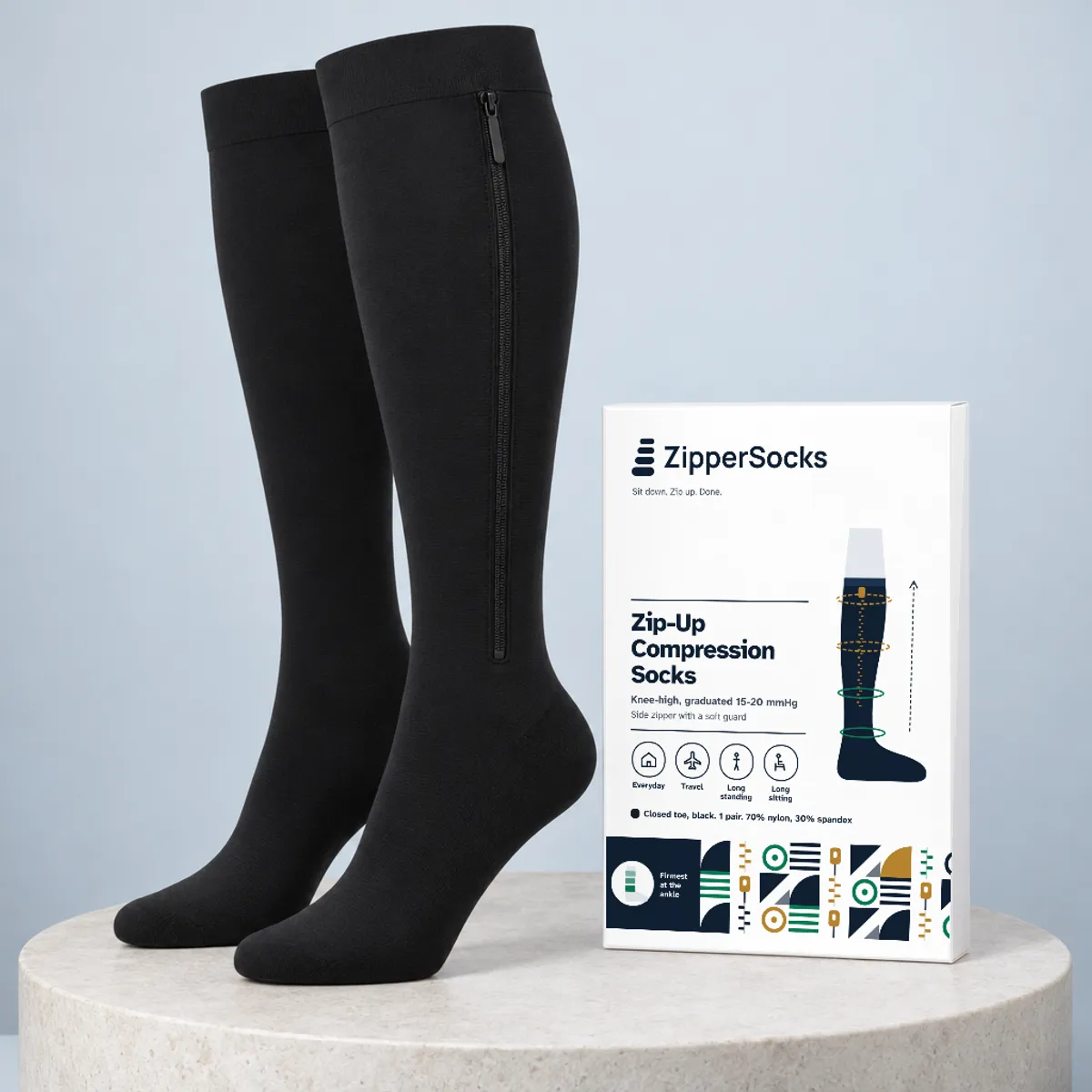
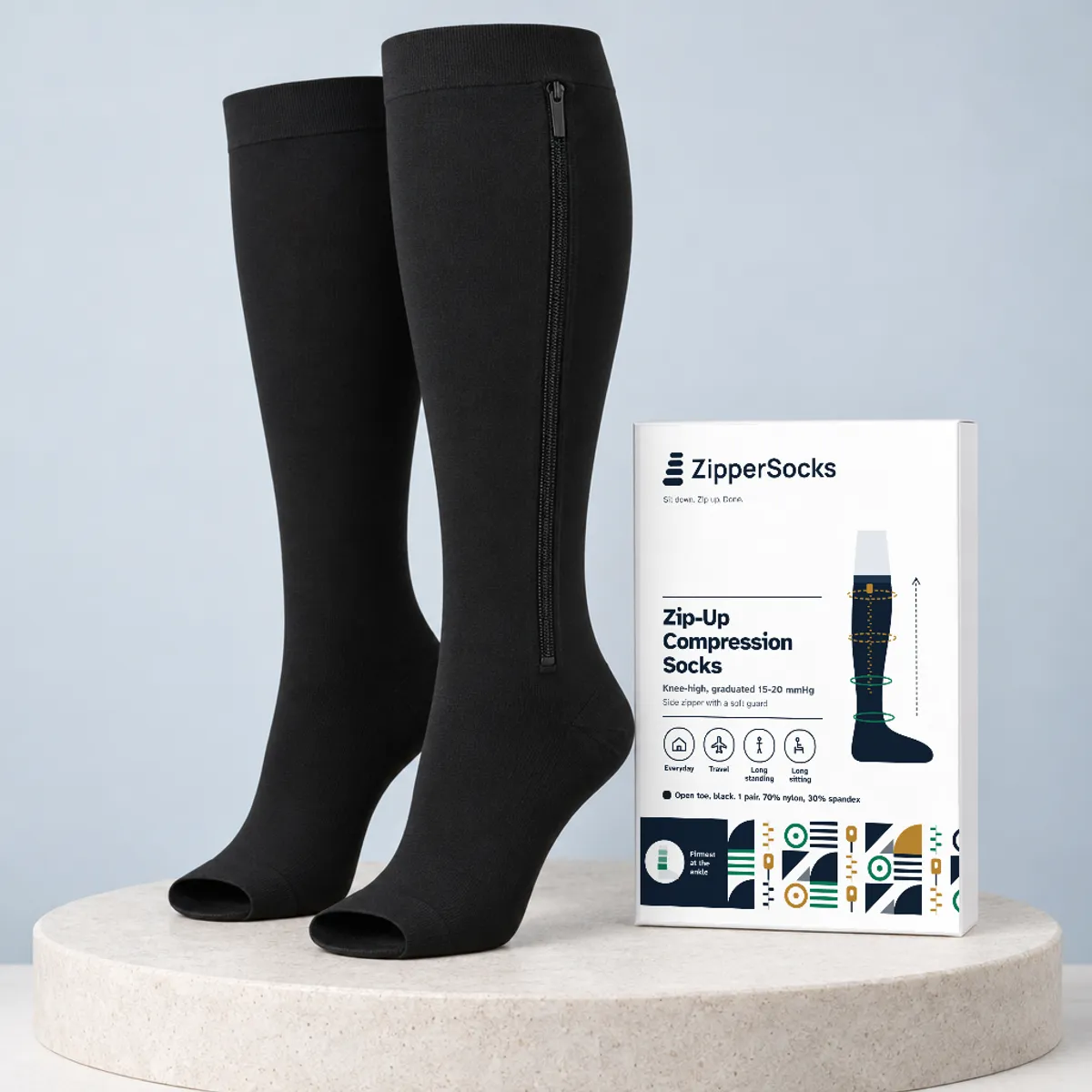
Ours are knee-high, graduated 15-20 mmHg, made from 70% nylon and 30% spandex, and made in an FDA-registered facility.
Women's knee-high compression socks for slimmer calves
Many women have a calf that sits at the small end of standard charts. That is why our range starts at size M, for calves 8 to 11 inches around at the widest point. Size L covers 11 to 13 inches.
How to measure
- Measure in the morning. MedlinePlus notes your legs are least swollen then.
- Sit with your foot flat on the floor and your knee bent.
- Wrap a soft tape measure around the fullest part of your calf. Keep it snug, not tight.
- Measure both legs and use the larger number.
If you land between two sizes, choose the larger one. Our compression sock size guide has the full chart in inches and centimeters.
A good fit feels like a firm, even hug at the ankle that eases as it goes up the leg. MedlinePlus says the fabric should not bunch up or wrinkle, so smooth it out once it is on.
Open toe compression socks for women: when they make sense
The two styles give the same 15-20 mmHg compression. The difference is your feet and your shoes.
- Choose open toe compression socks for sandals and open shoes in summer, if your feet run hot, or if you just prefer your toes free.
- Choose closed toe compression socks for work shoes, flats, sneakers and boots, for colder months, and when you want one simple layer.
Plenty of women keep a pair of each and switch with the seasons.
Zipper compression socks for women: why the zipper helps
Regular compression socks have to be stretched open and dragged over the heel, the widest point the fabric has to pass. That takes grip strength, and it is hard on long nails, a fresh manicure, sore wrists or a back that does not like bending.
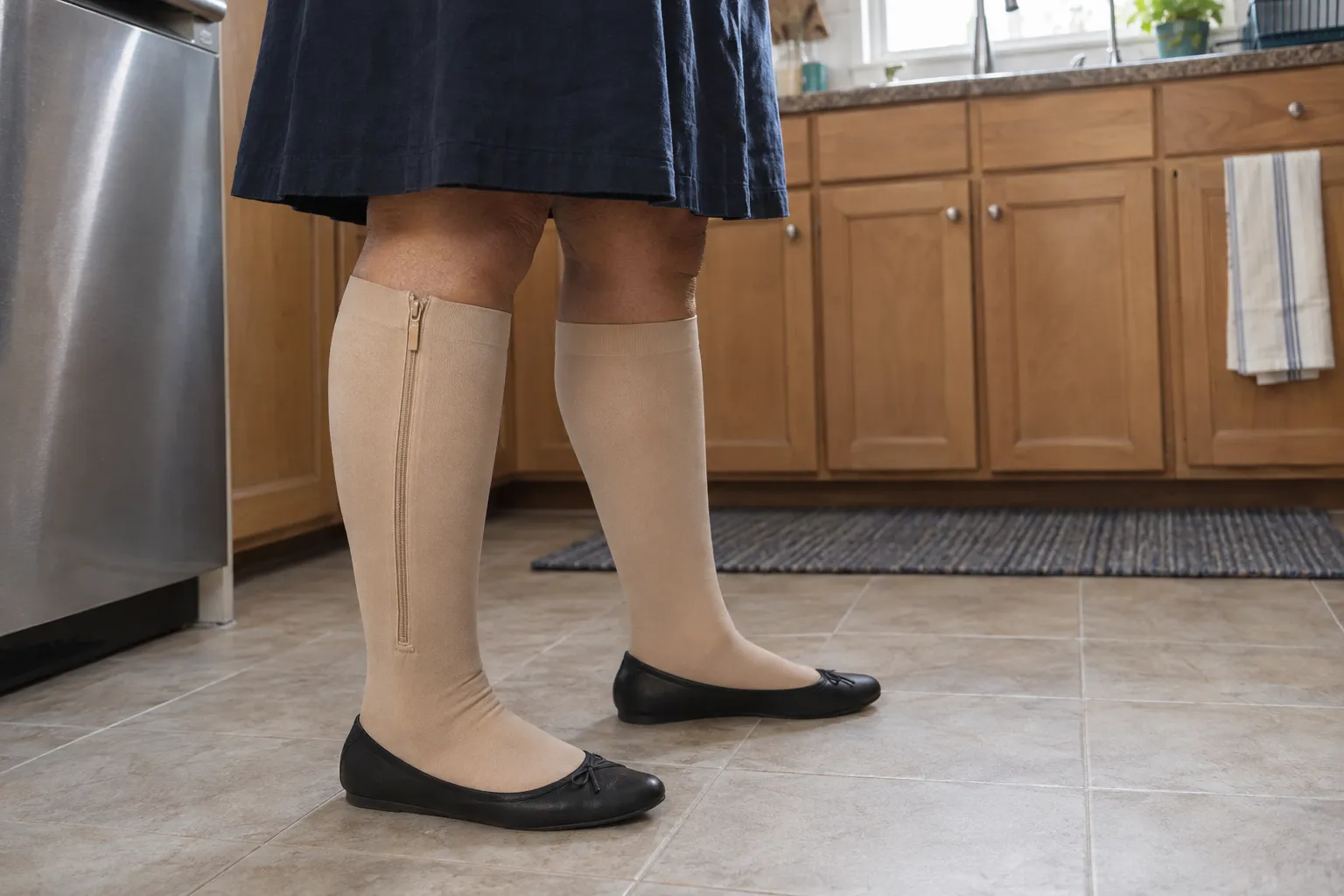
A side zipper skips that step. You open the sock flat, set your heel in place, and zip it closed up the side of your leg. A soft fabric guard sits behind the zipper teeth, so the zipper itself does not touch your skin. At the end of a long day, when your legs may be a little puffy, you unzip and step out.
Our step-by-step guide on how to put on compression socks covers both zipper and regular styles.
Beige or black: wearing compression socks with skirts, dresses and trousers
Color is a practical choice as much as a style one.
- Beige reads close to bare skin from a distance on many skin tones, so it is the quieter choice under knee-length skirts, dresses and cropped trousers in light colors.
- Black looks like a plain trouser sock or opaque tights. It works with dark trousers, jeans, boots, scrubs, and dark skirts in fall and winter.
Turn the zipper to the inside of your leg if you want it out of sight, or to the outside if that is easier for you to reach. With wide-leg trousers, nobody will see it either way.
Wear them during the day and take them off at bedtime, which is the NHS advice for compression stockings. The routine is easiest to keep when the socks go on as you get dressed in the morning and come off when you change for bed.