Compression Socks vs. Stockings vs. TED Hose
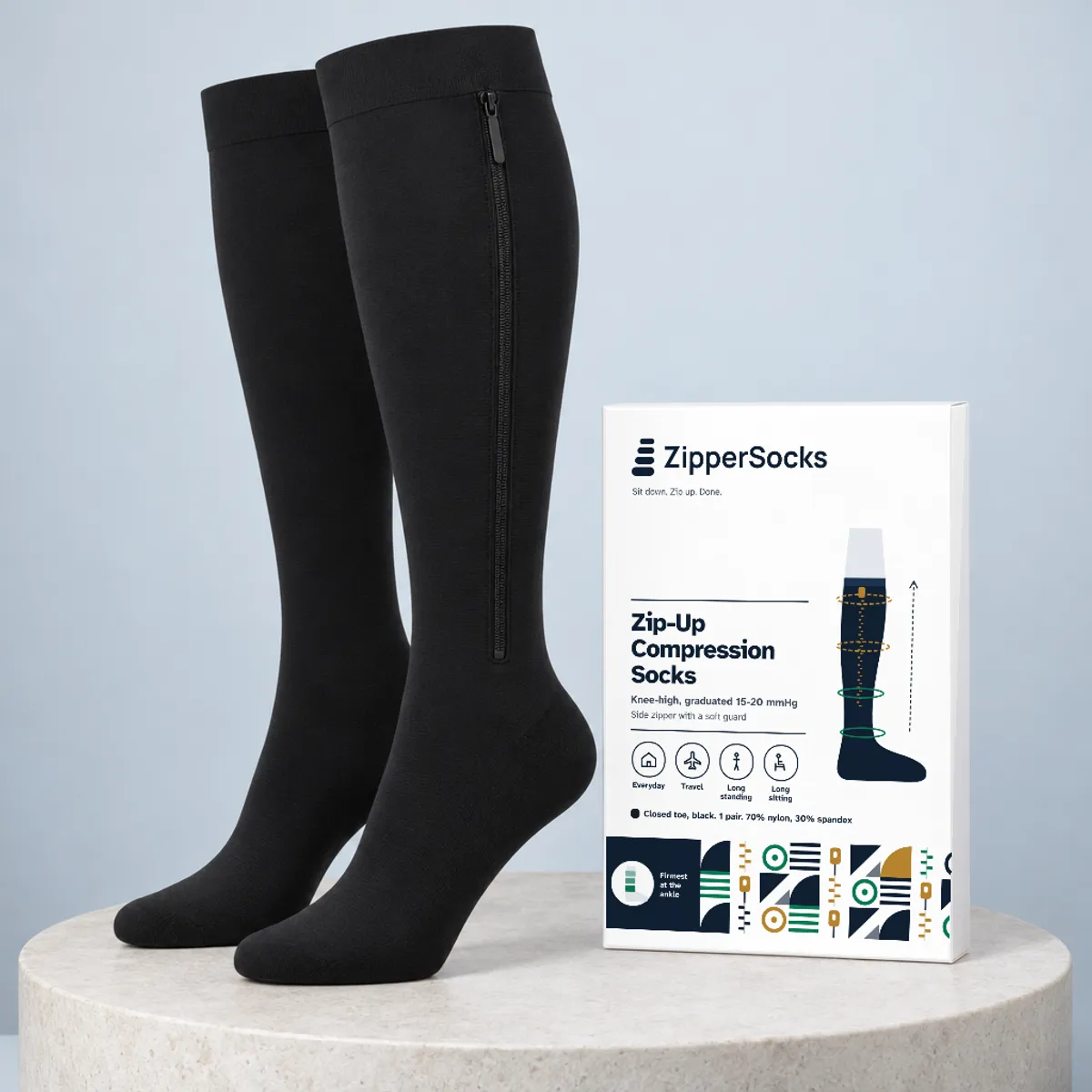
Our zip-up compression socks
-
-
| TED hose (anti-embolism stockings) | Compression socks | Compression stockings | |
|---|---|---|---|
| Made for | People in bed or with very limited mobility, often in the hospital after surgery | People who are up and about | People who are up and about and need coverage above the knee |
| Typical pressure at the ankle | About 14 to 18 mmHg | From mild (8-15 mmHg) to extra firm (30-40 mmHg and up) | The same range as socks |
| Length | Knee-high or thigh-high | Knee-high, ending below the knee | Thigh-high or pantyhose (waist-high) |
| Main purpose | Lower the risk of blood clots while you are not moving much | Everyday support for tired legs, mild swelling and long days on your feet or seated | Same as socks, when the problem reaches above the knee |
| How they are fitted | Legs measured by trained hospital staff | Usually by calf (and sometimes ankle) measurement | Calf, thigh and leg length measurements |
| Who usually chooses them | Your care team | You, or your doctor for firmer levels | You, or your doctor for firmer levels |
The short answer
The key question is not "sock or stocking." It is whether you are mostly lying down or mostly up and moving.
- Mostly in bed: anti-embolism stockings, often called TED hose, are made for you.
- Up and about: graduated compression socks or stockings are made for you.
A review in the Canadian Medical Association Journal puts it plainly. Anti-embolism stockings are designed for bedridden patients and don't meet the technical specifications for people who are walking. Graduated compression stockings are designed for people who are up and about.
Once you know which group you're in, socks vs. stockings is mostly about length.
What TED hose are and who they are for
T.E.D. is a brand of anti-embolism stocking made by Cardinal Health. Many people now say "TED hose" for any anti-embolism stocking.
Anti-embolism stockings use gentle, graduated pressure to help lower the risk of blood clots while you are not moving much. In the UK, NICE guidance calls for anti-embolism stockings that give 14 to 18 mmHg at the ankle. JOBST lists its Activa anti-embolism stocking at 18 mmHg and says it is designed for post-surgical patients and people with limited mobility. Truform's chart lists 18 mmHg anti-embolism stockings for people who are bed-bound, reclining or unable to walk without help.
In the hospital, these stockings are part of a care plan. NICE says the legs should be measured, staff trained in their use should fit them, and the skin should be checked every day. Nurses also watch for marks, blisters or color changes, especially over the heels.
If you were sent home in TED hose, follow your care team's instructions on how long to wear them. NICE says people discharged with these stockings should know when to stop wearing them and who to call if there is a problem.
Compression socks and stockings for everyday wear
Graduated compression socks and stockings are tightest at the ankle and ease off up the leg. They are made for people who are walking, standing and sitting through the day.
They come in more pressure levels than TED hose. Truform's chart, for example, runs from mild (8-15 mmHg) and moderate (15-20 mmHg) to firm (20-30 mmHg) and extra firm (30-40 mmHg). The firmer levels are usually worn on a doctor's advice. Our guide to what mmHg means walks through each level.
People wear everyday compression for many reasons, such as long flights and car rides, mild leg swelling, or long shifts on their feet.
Socks vs. stockings: knee-high, thigh-high or pantyhose
Compression socks and compression stockings work the same way. The difference is how far up the leg they go.
- Knee-high (socks): end just below the knee. MedlinePlus says knee-length stockings should stop about two fingers below the bend of the knee.
- Thigh-high (stockings): reach the upper thigh.
- Pantyhose or waist-high: cover both legs up to the waist.
Is longer better? Not necessarily. A Cochrane review of knee-length vs. thigh-length stockings after surgery found there was not enough good evidence to say one length works better than the other for preventing clots. The CMAJ review reached a similar conclusion.
Knee-highs have less fabric to pull on and fewer places to roll or bunch. Your doctor may still ask for a longer style if your swelling or veins extend above the knee.
Can you swap one for the other?
Don't swap on your own. If your care team gave you TED hose after surgery, keep wearing them the way they told you until they say you can stop. If your doctor prescribed a firmer sock or a thigh-high stocking, a milder or shorter sock is not a substitute.
Once you are home and active again, ask your doctor whether everyday compression socks would help. Many people find them easier to live with.
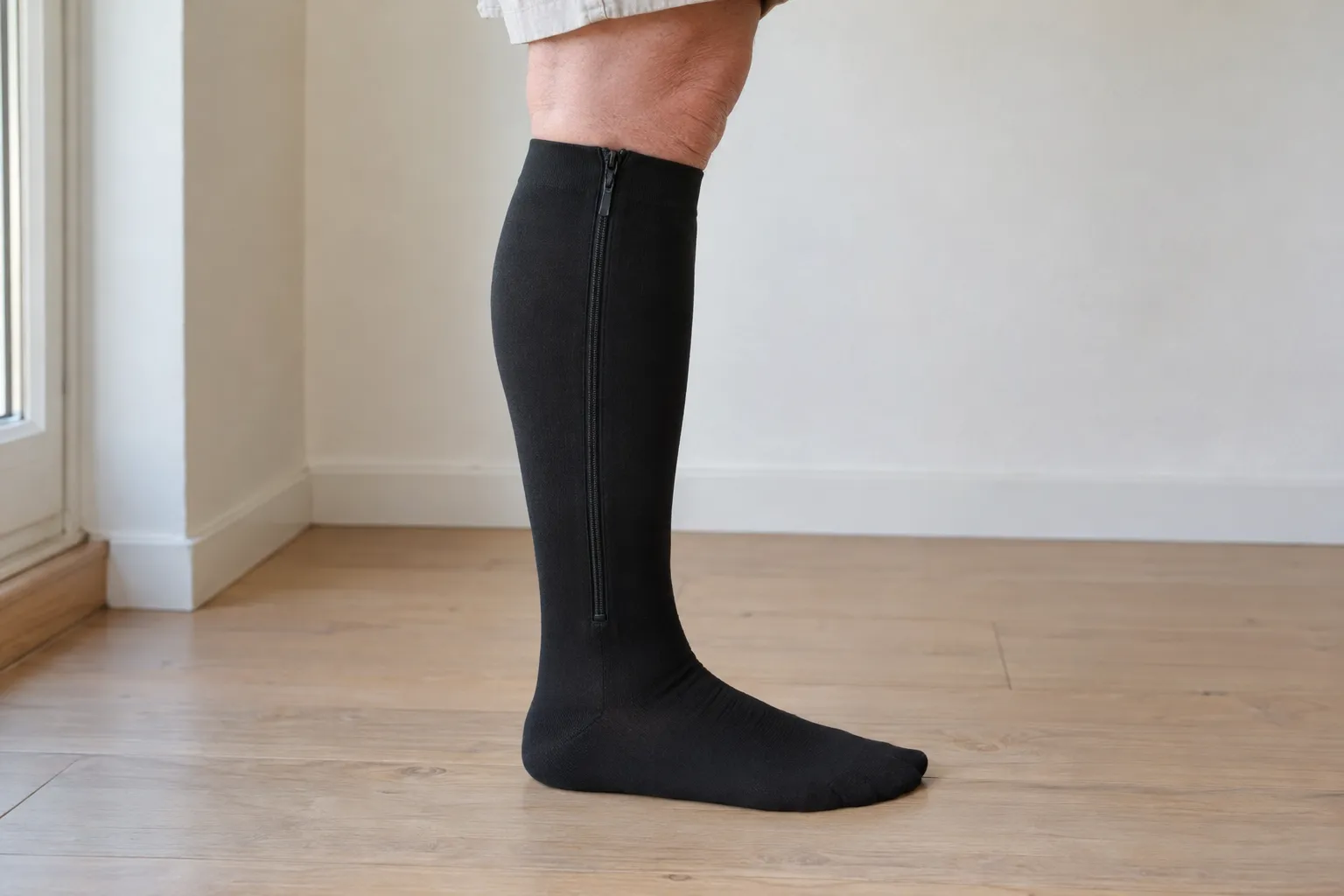
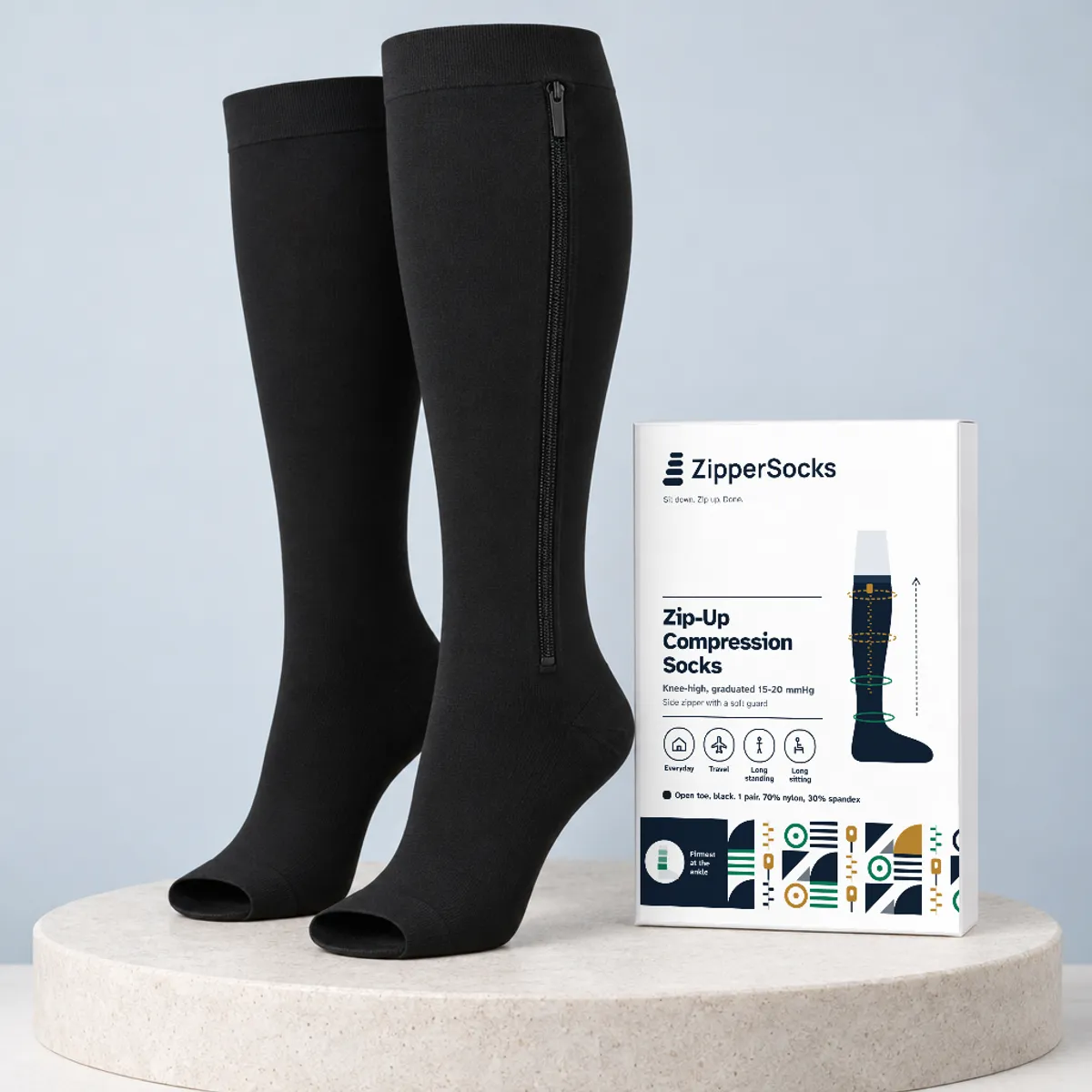
Our Zip-Up Compression Socks are knee-high, graduated 15-20 mmHg socks for everyday wear. They are not anti-embolism stockings. A full-length side zipper means you don't have to stretch the ankle over your heel, which helps if bending or gripping is hard. Not sure which toe style you want? Our zipper vs. regular comparison lays out the trade-offs.
Compression socks are not right for everyone. If you have peripheral arterial disease, poor circulation in the legs, heart failure, skin infections or open wounds, or reduced feeling in your feet, talk to your doctor before wearing them.